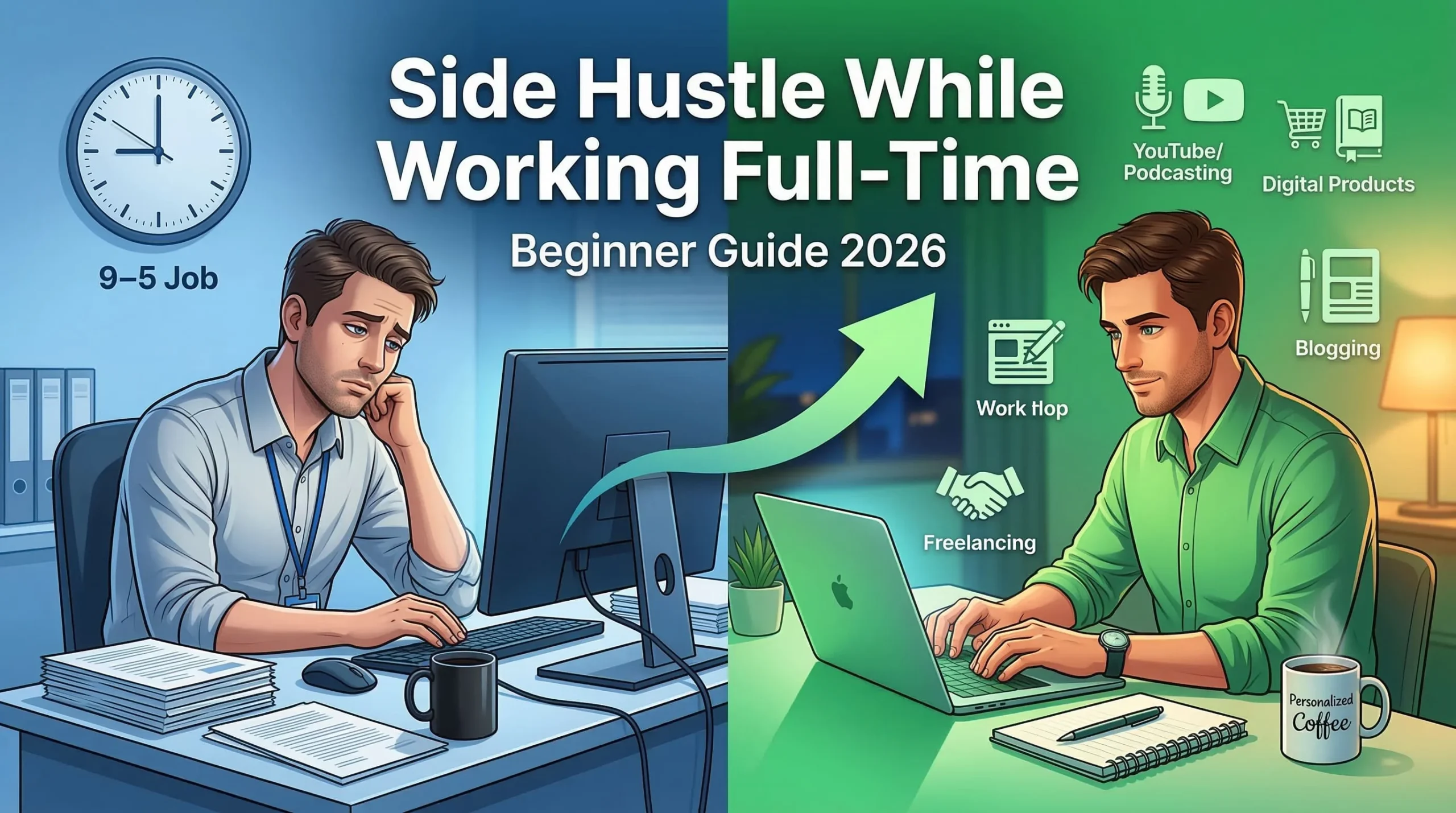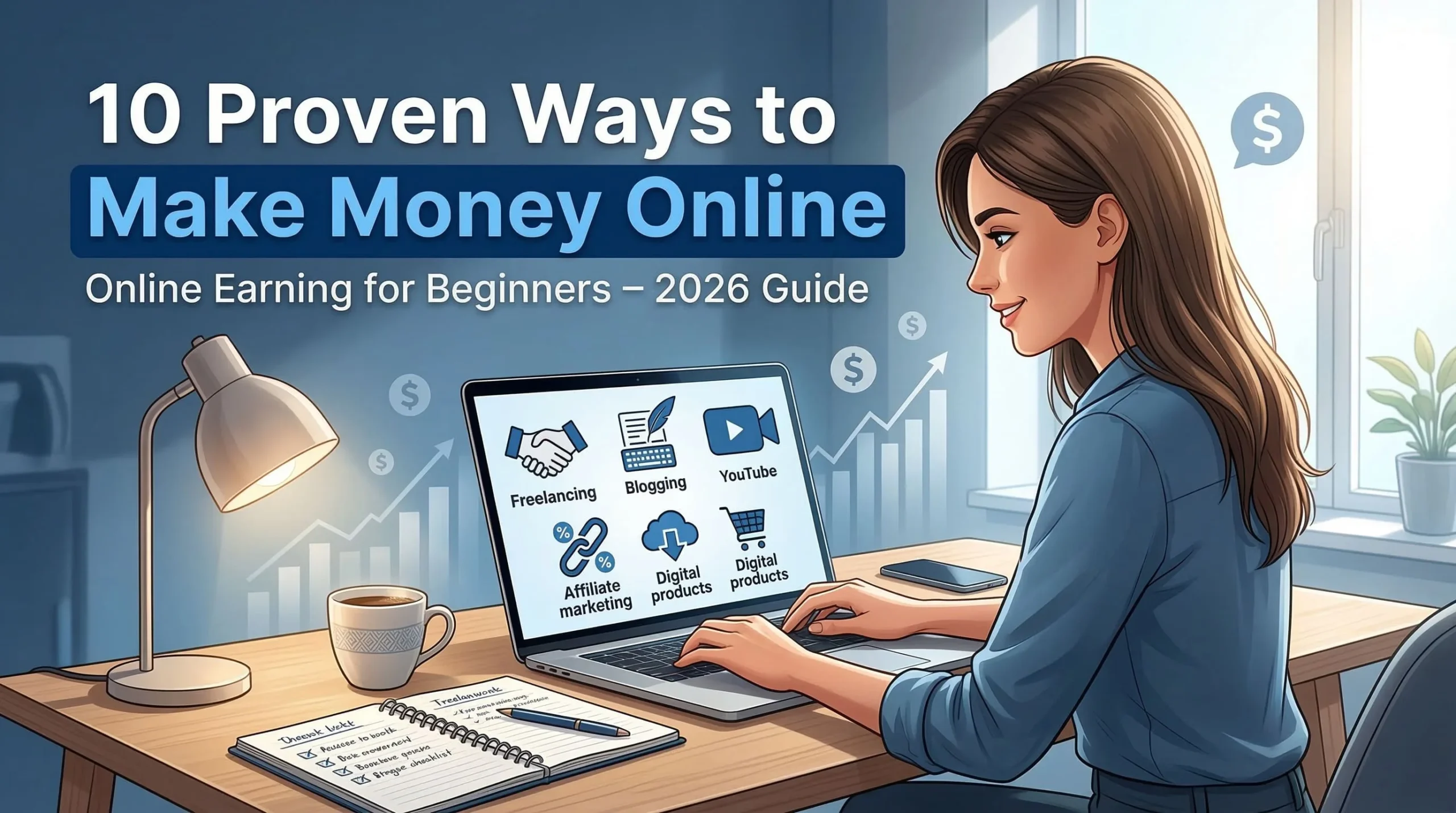

Starting a side hustle can feel exciting and scary at the same time. You might need more cash for bills or debt, or just want some financial freedom – and that’s completely normal. The important thing to remember is that side hustles are about building skills and steady effort, not getting rich overnight. In fact, side hustles are mainstream now: a 2024 survey found about 36% of U.S. adults have a side hustle, and even more Millennials and Gen Z workers are doing them. That means you’re definitely not alone in wanting extra income. This guide will walk you through 10 of the best, beginner-friendly side hustle ideas for 2026, explain how they work, and set realistic expectations. We’ll use real examples, helpful tables, and practical tips – so you can start learning and earning the right way, one step at a time.
Contents
- 1 Introduction
- 2 Top 10 Beginner-Friendly Side Hustles
- 2.1 1. Freelance Writing & Editing
- 2.2 2. Virtual Assistant Services
- 2.3 3. Online Tutoring or Teaching
- 2.4 4. Social Media Management
- 2.5 5. Selling Products Online (Handmade & Resale)
- 2.6 6. Ride-Share & Delivery Driving (Gig Apps)
- 2.7 7. Graphic Design & Digital Art
- 2.8 8. Data Entry, Transcription & Micro-Tasks
- 2.9 9. Blogging, Video & Content Creation
- 2.10 10. Micro-Task & Survey Platforms
- 3 Side Hustles Comparison Table
- 4 Frequently Asked Questions (FAQs)
- 5 Conclusion
Introduction

Imagine a future in 2026 where your extra efforts today make life easier tomorrow. Many people feel worried when they hear “side hustle” – maybe thinking of flashy “get rich quick” schemes. But the truth is, successful side hustles come from learning useful skills gradually. StartEarners.online is all about helping beginners earn online the right way. We won’t promise overnight success or guaranteed riches. Instead, we’ll show you how consistent effort pays off. With dedication, these side hustles can help you earn extra income and build a stronger resume. For example, nearly 59 million Americans freelance in some way, which shows how popular and achievable this path is for so many. Now let’s dive into our list of top side hustle ideas and how to begin.
Top 10 Beginner-Friendly Side Hustles
Below are 10 realistic side hustle ideas suitable for beginners in 2026. Each requires little or no upfront investment and most can be started from home or around your regular job schedule. We’ll explain what skills you need, how to get started, and give examples and estimates of what you might earn. Remember to focus on learning and improving – that’s how these grow into long-term income sources.
1. Freelance Writing & Editing

If you enjoy writing or editing, freelancing can be a great side hustle with almost no startup cost. All you need is a computer and internet. Companies and websites always need content – blog posts, marketing copy, emails, or product descriptions. Beginners can start with simple tasks like proofreading or writing short articles. Platforms like Upwork, Freelancer, and Fiverr host many writing gigs; in fact, Fiverr alone lists thousands of freelance writing and copywriting jobs.
- Skills: Good command of your language, research ability, basic grammar. Strong writers are in high demand.
- Platforms: Upwork, Fiverr, Freelancer, Textbroker, LinkedIn groups.
- Earnings: Varies widely. Entry-level writers might earn $10–$30 per article or $15–$25 per hour, while experienced writers charge more. ZipRecruiter reports freelance proofreaders around $29/hr on average. As you gain experience and samples, your rates can rise.
Example: A beginner might start by offering to write simple blog posts for a small business. Over time, you could build a portfolio of articles or edited documents. (Read our guide on freelancing skills to learn how to pitch clients and build your freelance profile.)
2. Virtual Assistant Services

Busy entrepreneurs, small business owners, and professionals often need help with routine tasks. As a virtual assistant (VA), you handle administrative duties remotely. Tasks could include managing email, scheduling appointments, booking travel, or entering data. Because many tasks require only basic computer skills, this side hustle is very beginner-friendly.
- Skills: Organization, communication, basic software (email, calendars, spreadsheets). Reliability and prompt communication are key.
- Platforms: Upwork, Belay, Fancy Hands, Zirtual, Freelancer. You can also market yourself on social media or a simple personal website.
- Earnings: On average around $24/hr for VAs. Entry-level VAs often make $15–$25 per hour, depending on complexity of tasks.
Example: You might sign up on a platform like Fancy Hands or create a listing on Upwork as a general VA. As you complete simple tasks (making appointments, data entry, customer follow-ups), clients will leave feedback that helps you get higher-paying jobs. Over time this can become a steady source of income.
3. Online Tutoring or Teaching

Have knowledge of school subjects, languages, or other skills? Online tutoring lets you teach students worldwide via video chat. This could be academic tutoring (math, science, test prep), teaching English as a second language, or coaching people in skills (coding, music, art). Tutoring platforms and language schools often provide lesson plans, so you can start even without prior teaching experience.
- Skills: Expertise in a subject (like math, science, coding, or language), patience and communication skills. No degree needed for many basic tutoring sites (though some may require one for K-12 or adult ESL teaching).
- Platforms: VIPKid, Chegg Tutors, Tutor.com for academics; Cambly, Italki, or Preply for languages; Udemy or Teachable if you want to create a course. Some people also use Zoom or Skype on their own.
- Earnings: Academic tutors often earn $20–$40/hr; language tutors around $10–$25/hr. For example, Coursera notes tutoring can average $35/hr. Test-prep specialists (SAT/ACT) or niche subjects can charge more.
Example: If you are good at math, you could start by offering SAT or calculus tutoring. Companies like Khan Academy or Wyzant hire tutors, or you can join a site like Chegg Tutors. Even without a degree, many services match students with tutors. As you build a reputation (good reviews and improved grades for students), you can raise your rates.
4. Social Media Management
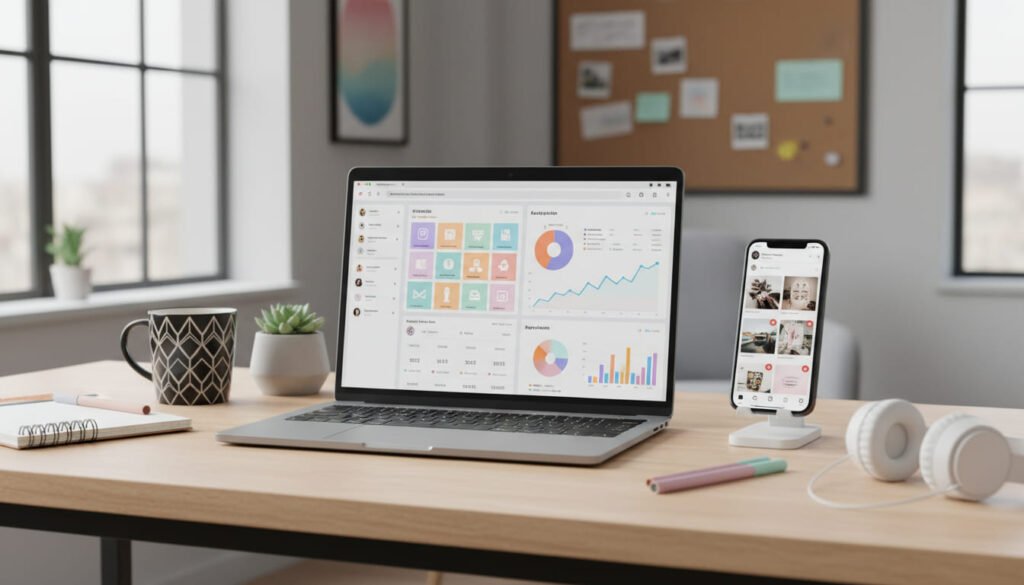
Many small businesses and creators need help with social media but don’t have the time or expertise. Social media managers help create posts, respond to comments, and grow followers on platforms like Instagram, Facebook, or Twitter. It’s a great side hustle for someone who enjoys content creation and learning about online marketing.
- Skills: Familiarity with social platforms, creativity, basic marketing sense. You don’t need formal training – there are plenty of free online guides to get started.
- Platforms: You can find social media gigs on Upwork and Fiverr, or reach out directly to local businesses (restaurants, shops, coaches) and offer your services.
- Earnings: Coursera reports an average of $31/hr for social media managers. Beginners often start at $15–$25/hr and can increase rates as they show results (e.g. more followers or engagement for a client).
Example: Suppose a small café needs an Instagram presence. You could offer to schedule and create posts, engage with followers, and run occasional promotions. Over time, as you demonstrate how your posts lead to more customers, you can charge more. (For more on marketing skills, see our guide to digital marketing basics.)
5. Selling Products Online (Handmade & Resale)

If you have a craft or a knack for finding deals, selling products online is a popular side hustle. This includes making and selling handmade items (jewelry, art, printables) or flipping used products for profit. Thanks to global marketplaces, beginners can set up shops with almost zero rent.
- Skills: Creativity (for crafts or design), a good eye for bargains (for resale), and basic customer service. Some skills like photography (to take good product photos) and writing (product descriptions) help a lot.
- Platforms: Etsy and Shopify are great for handmade goods. eBay, Poshmark, Mercari or Facebook Marketplace work well for reselling clothes or thrift finds. Print-on-demand sites like Redbubble or Printful let you design graphics printed on demand (no inventory cost).
- Earnings: This varies a lot. Some crafters make a few hundred dollars a month; others grow full businesses. ZipRecruiter notes craft sellers average around $19/hr. Flipping items can bring $15–$30 per hour of work (depending on what you resell). The key is low investment: you only spend money when you have a sale.
Example: You could start by selling handmade candles or jewelry on Etsy. Or try “thrift flipping”: buy vintage clothing at thrift stores and resell them online. Many beginners report clear profits after fees. It helps to start small – maybe listing a few items – and learn what sells. (Tip: great photos and honest descriptions build trust with buyers.)
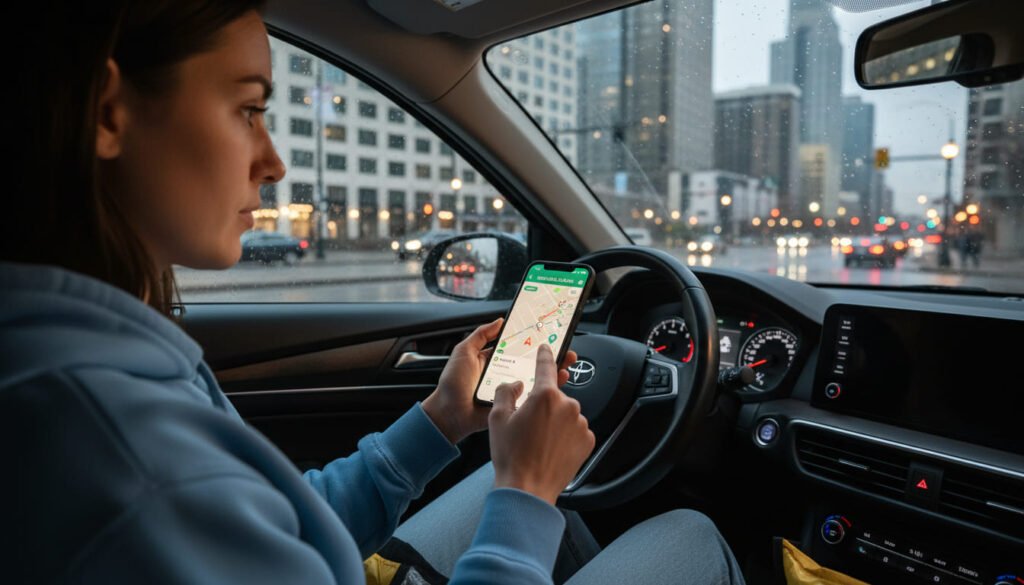
This side hustle is more for people with a car (or bike) and flexible hours. Apps like Uber, Lyft, DoorDash, Instacart, and others let you earn by driving people or delivering food/groceries. You can often work whenever you have spare time – evenings, weekends, or between tasks.
- Skills: A valid driver’s license, a reliable vehicle or bike, and navigation skills. You also need good customer service.
- Platforms: Uber, Lyft (ride-sharing); DoorDash, Uber Eats, Grubhub (food delivery); Instacart, Shipt (grocery delivery). Pet sitting/dog walking apps like Rover also fit this category (if you love pets instead of driving).
- Earnings: These vary by region and time. For example, Uber drivers in the U.S. make about $15–25/hr on average, with busy cities topping $25–$30/hr. Delivery apps often pay $10–20+ per delivery, plus tips. Instacart shoppers report $16–27/hr. Remember to account for gas and vehicle wear-and-tear in your calculations.
Example: If you live in a city, you might drive for Uber a few evenings a week. Or, if you prefer less face-to-face time, you could deliver groceries with Instacart on weekends. These gigs let you start earning very quickly (often within a few days of signing up), which helps bridge the income gap while you grow other longer-term hustles.
7. Graphic Design & Digital Art

Creative types can turn design skills into cash. If you know (or are willing to learn) tools like Canva, Photoshop, or Illustrator, you can make logos, social media graphics, flyers, or even book covers. Clients range from local businesses to bloggers and authors.
- Skills: Artistic creativity, basic design software skills (many free tutorials online). Good taste and an eye for layout are important.
- Platforms: Fiverr and Upwork have graphic design categories. You can also use print-on-demand sites like Redbubble or TeeSpring to sell designs on t-shirts, mugs, etc.
- Earnings: On average around $27/hr for graphic designers, though beginners may start lower. You might earn $10–$20 per graphic at first. The great thing is that as you build a portfolio, you can charge more.
Example: Start by creating some free sample logos or social graphics, and list them on Fiverr. As you complete orders and get 5-star reviews, increase your rates. Some designers also sell templates or presets (like Lightroom filters) for passive income. Over time, good designers can earn hundreds of dollars per project.
8. Data Entry, Transcription & Micro-Tasks

If you prefer quiet, home-based work with simple entry-level requirements, consider tasks like data entry or transcription. This involves converting audio to text, entering information into spreadsheets, or completing short online tasks. These gigs usually pay less per hour but can be done anytime you have a few minutes. They’re also great for introverts or students looking to earn on the side.
- Skills: Basic typing, attention to detail, good listening (for transcription). No advanced training needed.
- Platforms: Rev.com, TranscribeMe, Scribie for transcription. Amazon Mechanical Turk, Clickworker, or Appen for micro-tasks and data tagging. Some sites also have survey tasks (though survey pay is very low, it’s an option).
- Earnings: Typically on the lower end. Transcriptionists may start around $10–$20/hr; Coursera cites $20/hr average for transcription (with experience). Data entry and micro-tasks might pay $5–$15 per hour. Think of these as “quick cash” hustles: they can be done evenings or weekends to supplement your income without needing new skills.
Example: Sign up on Rev.com as a transcriber. You’ll listen to audio clips (interviews, speeches) and type them out. It’s relatively easy but requires concentration. Or join Amazon Mechanical Turk to do very short tasks (like categorizing images or transcribing short phrases). Many people mix a few hours of these gigs with their main side hustles to keep money flowing.
9. Blogging, Video & Content Creation

Creating content – such as blogging, YouTube videos, podcasts, or social media channels – can start slowly but may become a powerful passive income source over time. This is more of a long-term side hustle: it takes time to build an audience, but once you do, you can earn through ads, sponsorships, or affiliate links.
- Skills: Creativity, basic tech skills (like using WordPress or video editing software), and consistency. You don’t need to be a Hollywood filmmaker; many use simple cameras or even smartphone setups.
- Platforms: WordPress or Medium for blogs; YouTube, TikTok, Instagram for video; Anchor or Spotify for podcasts. For monetization, programs like Google AdSense (for blogs/videos) or Amazon Associates (affiliate links) are common.
- Earnings: Varies hugely. Coursera notes content creators average $56/hr once established, but that reflects successful channels. Most beginners earn very little at first. Instead of relying on this for immediate pay, think of it as building a brand. Over months or years, a blog or YouTube channel can become a reliable income stream.
Example: Maybe you start a YouTube channel teaching guitar lessons or share cooking recipes on a blog. At first it may make zero, but as you post regularly and grow followers, you can apply for monetization. Add affiliate product reviews or sponsorships to your videos. It takes patience: “it can take a bit of time before your audience is large enough to monetize”. But the payoff can be huge – some creators earn thousands monthly once they have a following. (Patience and consistency are key!)
10. Micro-Task & Survey Platforms

For absolute beginners wanting very low-barrier hustles, micro-task sites and paid surveys exist. These pay a few cents or dollars per task, but require almost no skills and no money upfront. They won’t replace a full income, but they can add pocket change or small earnings weekly.
- Skills: Basically none beyond internet browsing and basic honesty. Common tasks include filling surveys, watching videos, testing websites, or labeling images.
- Platforms: Swagbucks, InboxDollars, Google Opinion Rewards for surveys. For small digital tasks, try Amazon Mechanical Turk, Microworkers, or Appen.
- Earnings: Very low per task (e.g. $0.50–$3 per survey or simple task). However, if you dedicate an hour or two, you might make $10–$20. This is one of the “quickest and easiest” ways to start earning any money (since sign-up is instant), but it’s more of a supplemental hustle.
Example: Join Swagbucks and earn points (convertible to gift cards or PayPal cash) by answering surveys or doing daily searches. Or use Mechanical Turk to complete data verification tasks in small batches. These pay little, but if you have odd minutes during the day, they add up. (Be aware: treat these sites with caution and avoid any that ask for money to join.)
Side Hustles Comparison Table
The table below summarizes key aspects of some popular side hustles: what skills they need, where to find work, and a rough idea of earnings.
| Side Hustle | Skills/Requirements | Platforms/Tools | Earning Potential |
|---|---|---|---|
| Freelance Writing & Editing | Good writing, research, SEO knowledge | Upwork, Fiverr, Freelancer, LinkedIn | $10–$50+ per article (or ~$15–$30/hr) |
| Virtual Assistant | Organization, communication, basic software | Upwork, Belay, Fancy Hands, Zirtual | $15–$30 per hour (avg ~$24/hr) |
| Online Tutoring | Subject expertise, teaching ability | VIPKid, Chegg Tutors, Tutor.com, Preply | $20–$40 per hour (avg $35/hr) |
| Social Media Management | Creativity, familiarity with platforms, basic marketing | Upwork, Fiverr, Instagram, Facebook | $20–$50 per hour (avg $31/hr) |
| Selling Products Online | Creativity, product sourcing, photography | Etsy, eBay, Shopify, Redbubble | Varies (some make $10–$30/hr in profit) |
| Ride-Share & Delivery | Driver’s license, reliable vehicle/bike | Uber, Lyft, DoorDash, Instacart | $15–$30 per hour (varies by location) |
Frequently Asked Questions (FAQs)
What are the best side hustles for beginners with no experience?
Beginner-friendly side hustles usually require only time and basic skills. Some top choices are freelance writing, virtual assistant work, data entry/transcription, and online tutoring. These can be started with little training – often only free online resources and a computer. For example, many content writers and data-entry clerks begin by practicing on platforms like Fiverr or Upwork. The key is to choose something that interests you (so you’ll stick with it) and where you can offer effort rather than formal credentials.
How much time does it take to start a profitable side hustle?
It varies by hustle. Some gigs pay fast – for instance, driving or delivering can put money in your pocket within days. Others, like content creation or building a freelance career, take longer. As one guide notes, “Some are quick wins. Some take more time. But they all can help you get closer to your money goals”. A safe approach is to start small and be patient: spend time learning the basics, then put in consistent hours each week. Typically, plan for at least a few weeks or months of effort before earnings become significant. Track your progress: set a weekly target (like learning a new skill or applying to gigs) and adjust as you go.
Which side hustles require the least upfront investment?
Many online hustles need virtually no money to begin. Freelancing (writing, design, marketing), tutoring, and transcription only require a computer and internet. Selling services on platforms like Upwork or Fiverr is free. Even selling products can start small: you might make crafts at home or resell things you already own. For example, making an Etsy shop can be done with minimal fees and inventory. In contrast, things like driving require a vehicle and insurance. In general, digital skills and service-based hustles have the lowest startup costs.
Can you learn side hustle skills online for free?
Absolutely. There are countless free resources to build relevant skills. Websites like Coursera, Khan Academy, YouTube, and blogs offer free courses in writing, coding, design, and more. For instance, YouTube tutorials can teach basic graphic design or social media marketing. Even if you enroll in a paid course, many platforms let you audit classes for free. The key is commitment: spend a few hours a week learning. (We also offer free courses and guides on StartEarners.online – check out our “Digital Skills” section.)
What side hustles fit around a full-time job schedule?
Flexible side hustles – ones you can do evenings or weekends – are best around a full-time job. Many of the ideas above qualify. For example, tutoring can be scheduled after work hours; content creation can be done whenever you have time; rideshare driving or delivery you pick your shifts. According to Coursera, the ideas listed above “offer some scheduling flexibility, allowing you to pursue a side hustle while still prioritizing a full-time work schedule”. Prioritize hustles where you control timing: you set your own hours as a freelancer, or drive only when you’re free.
How do you know if a side hustle will actually earn money?
Before diving in, do a little market research. Check if people are paying for that service: look at how many job postings or ads there are for it. For example, search Upwork or LinkedIn for writers or designers to see demand. Ask yourself if your skill is something others need. Start small (maybe take one client or sell one item) and measure results. It helps to plan: research your target market, set clear goals, and maybe do a trial run. Over time, you’ll see what’s profitable based on feedback and repeat customers. Track your time spent versus money earned each week – that tells you if the hustle is worth it.
What skills do the best side hustles teach you long-term?
Side hustles build real-world, transferable skills. Freelancing teaches project management, communication, and self-discipline. Designing or marketing hones creativity and tech skills. Tutoring sharpens teaching and interpersonal skills. In general, every side gig improves “real-world experience that employers value”. For example, by completing client projects you build a portfolio, learn to solve problems on the fly, and gain confidence in your abilities. You also learn soft skills like time management (juggling a side hustle with life) and networking (finding clients). These skills boost your resume and career even beyond the side hustle itself.
Are there side hustles suitable for staying home all day?
Yes – many side hustles are 100% home-based. Online freelancing, virtual assisting, data entry, and tutoring can all be done from home with just an internet connection. In fact, Coursera notes that “you can launch many of the listed side hustles right from home – no formal office space is needed. If you have an internet connection, that’s all you need to begin”. Other home-friendly ideas include taking surveys, writing e-books, or selling digital products. If your goal is to stay home (for example, for introverts or stay-at-home parents), focus on online skills like writing, design, or coding.
How to track earnings and progress in a new side hustle?
Set simple goals and use tools. For instance, keep a spreadsheet of all gigs and payments. Track hours you work and money earned each week to see progress. Free tools like Google Sheets, Toggl (for time tracking), or budgeting apps (Mint, etc.) can help. Many freelancers also use project management apps (Asana, Trello) to organize tasks. The key is habit: at the end of each week, jot down earnings and reflect on what went well. This practice keeps you accountable and shows when it’s time to raise prices or try a new approach.
What mistakes do beginners make with side hustles?
Common pitfalls include setting unrealistic expectations and quitting too soon. Don’t expect big income in the first week or to find a big “get rich quick” method. Also, beginners sometimes spread themselves too thin by jumping into many hustles at once. Instead, focus on one or two and do them well. Other mistakes: not tracking earnings (so you don’t realize what’s profitable), not reinvesting in learning (e.g. upgrading a computer or course), or overpromising to clients (never agree to something you can’t deliver). Learn from feedback – if something fails, tweak your approach rather than giving up immediately. Remember: consistency beats quick schemes.
Can side hustles turn into full-time careers over time?
Absolutely. Many entrepreneurs and freelancers started as part-timers. For instance, a blogger or YouTuber might start on weekends and grow it into a full online business. Coursera even notes that “many [side hustle] ideas… can also become full-time small business ventures, with the right business plan to back them up”. The side hustle acts like a “pilot project” – you prove the concept while still having some safety net. If your side gig consistently earns more than your day job or outgrows it, you can transition full-time. Examples include freelance writers who launch agencies, e-commerce sellers who open larger stores, or social media managers who create marketing firms. It requires planning (saving money, having clients lined up), but it’s possible.
Which side hustles improve resume skills for job seekers?
Most side hustles build useful resume skills. For example, managing social media shows marketing and communication skills; tutoring shows teaching and leadership; freelancing shows initiative and project experience. When you list a side hustle on your resume, highlight what you accomplished (e.g. “Managed Instagram marketing for a local shop, increasing followers 30%,” or “Tutored 20+ students in math and science with positive outcomes”). Side hustles also demonstrate time management and entrepreneurship. As one guide puts it, side hustles are like a “career transition laboratory,” giving you transferable skills that directly support your target career path. In short, employers often value side hustle experience because it shows real results – you have projects, client testimonials, or creative outputs to point to.
Conclusion

Starting a side hustle is a smart step toward financial flexibility, but remember it’s a journey. Keep learning, be patient, and focus on improving one skill at a time. Consistency is more important than quick wins: even an hour a day can add up to real progress over months. Embrace mistakes as lessons and celebrate small successes. Over time, that extra income and experience will build confidence and maybe even open new career doors. Ready to begin? Pick one idea from above, do some quick research, and start today – maybe by drafting a quick gig profile or taking a free tutorial. Every expert was once a beginner, and every big business started small. With steady effort, your 2026 side hustle can become a valuable income stream.
Start learning today and grow your skills step by step – you’ve got this!