

Let me ask you something honest: have you ever searched for “how to make money online” and ended up more confused or doubtful than when you started?
You are not the only one. There are a lot of flashy promises, fake screenshots, and “gurus” on the internet selling dreams. But I’ve learned this: people who really make money online don’t look for easy ways out; they work on their skills.
There has never been a greater need for online skills than there is now. Companies in the US, UK, Australia, and Canada are actively hiring remote workers, freelancers, and digital professionals. Many of them are self-taught beginners who started out just like you are now.
This guide isn’t about getting rich quickly. It’s about giving you a clear, honest picture of which online skills are worth your time, how long they really take to learn, and where you can start today for free or at a low cost.
⚡ Realistic Expectation: Most people who make money online on a regular basis started by learning one skill, practicing it for three to six months, and then offering it to real clients. There is no easy way, but there is a clear way.
Contents
- 1 Why Learning Online Skills in 2026 Is a Smart Move
- 2 The Best Online Skills Beginners Can Learn in 2026
- 2.1 1. Freelance Writing & Content Creation
- 2.2 2. Graphic Design (Using Canva & Adobe Express)
- 2.3 3. Social Media Management
- 2.4 4. Virtual Assistant (VA) Work
- 2.5 5. Basic Video Editing
- 2.6 6. SEO (Search Engine Optimization) Basics
- 2.7 7. Transcription & Closed Captioning
- 2.8 8. Online Tutoring & Teaching
- 3 Skills vs. Platforms vs. Estimated Earnings: A Quick Comparison
- 4 How to Choose the Right Online Skill for You
- 5 Where Beginners Can Learn These Skills for Free (or Low Cost)
- 6 Frequently Asked Questions About Learning Online Skills in 2026
- 6.1 Can a complete beginner really earn money online without experience?
- 6.2 What is the easiest online skill to learn for beginners?
- 6.3 Do I need to invest money to start learning online skills?
- 6.4 How many hours per week should I dedicate to learning?
- 6.5 Which online skill has the highest income potential for beginners?
- 6.6 Is it too late to start learning online skills in 2026?
- 7 Common Mistakes Beginners Make (And How to Avoid Them)
- 8 Final Thoughts: Your Online Journey Starts With One Skill
Why Learning Online Skills in 2026 Is a Smart Move
The world has changed. Remote work is now mainstream, not an exception. According to recent workplace trends, a large portion of job growth in English-speaking countries involves digital roles that can be done entirely from home.
More importantly, the barrier to entry has dropped dramatically. You don’t need a degree. You don’t need expensive equipment. You need a laptop, internet access, and the willingness to learn consistently.
Here’s what makes 2026 especially interesting for beginners:
- AI tools have made many tasks faster — but human creativity, communication, and strategy are still in high demand.
- Platforms like Fiverr, Upwork, and LinkedIn have made it easier than ever to connect with paying clients.
- Free resources on YouTube, Coursera, and Google’s own learning programs mean you can start building skills today without spending money.

The Best Online Skills Beginners Can Learn in 2026
Below, I’ve broken down each skill by what it is, how hard it is to learn, how long it takes to get started, and where you can find work. Think of this as your skills roadmap.
📌 Internal Link Suggestion: Freelance Writing for Beginners 2026: How to Start, Build Skills, and Earn Online the Right Way
1. Freelance Writing & Content Creation
If you can write clearly in English, you have a marketable skill right now. Businesses of all sizes — from small blogs to large e-commerce stores — need written content constantly: blog posts, product descriptions, social media captions, email newsletters, and more.
How to start: Practice writing 500-word blog posts on topics you enjoy. Build a small portfolio of 3–5 sample articles. Then offer your services on platforms like Fiverr, Upwork, or ProBlogger.
Average learning time to first paid work: 4–8 weeks of consistent practice.
2. Graphic Design (Using Canva & Adobe Express)
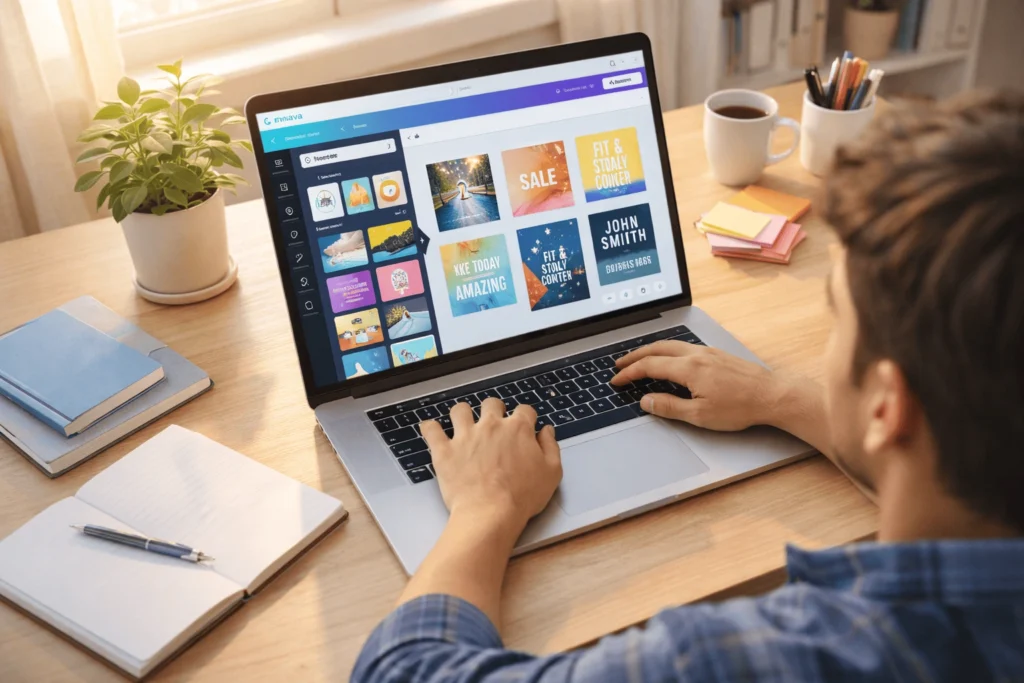
You don’t need to be an artist to get into graphic design. Tools like Canva have made it genuinely beginner-friendly. Clients need social media graphics, business cards, YouTube thumbnails, presentation templates, and more.
How to start: Sign up for Canva’s free account and follow beginner tutorials on YouTube. Once you’ve created 10–15 design samples, open a Fiverr gig offering social media graphics or logo design.
Average learning time to first paid work: 3–6 weeks.
3. Social Media Management
Every small business needs a social media presence, but most business owners don’t have the time to manage it themselves. That’s where social media managers come in. Your job would be to create posts, schedule content, respond to comments, and grow their audience.
How to start: Learn the basics of Instagram, Facebook, LinkedIn, and TikTok marketing. Google’s Digital Garage and Meta Blueprint both offer free courses. Start by managing one small business account — even for free or low cost — to build real experience.
Average learning time to first paid work: 4–8 weeks.
4. Virtual Assistant (VA) Work
A virtual assistant helps business owners, entrepreneurs, and coaches with day-to-day tasks — things like managing emails, scheduling appointments, data entry, research, or handling customer inquiries. It’s one of the most accessible entry points for complete beginners.
How to start: Identify which tasks you’re good at (admin, research, scheduling). Sign up on platforms like Belay, Time Etc, or Upwork. Many VA jobs require only basic computer skills and good communication.
Average learning time to first paid work: 2–4 weeks.
5. Basic Video Editing
With the explosion of YouTube channels, TikTok creators, and online course creators, the demand for video editors has skyrocketed. Even basic editing skills — cutting clips, adding captions, inserting music, and transitions — are enough to land beginner clients.
How to start: Learn CapCut (free, mobile-friendly) or DaVinci Resolve (free, desktop). Practice by editing short clips from YouTube or your own phone footage. Show your work on a simple portfolio page.
Average learning time to first paid work: 6–10 weeks.
6. SEO (Search Engine Optimization) Basics
SEO is the practice of helping websites show up higher in Google search results. It sounds technical, but the fundamentals are learnable for anyone. Many small businesses are desperately looking for people who understand basic keyword research, on-page SEO, and content strategy.
How to start: Take Google’s free SEO fundamentals course, or go through Ahrefs’ free SEO tutorials on YouTube. Tools like Ubersuggest offer free plans for beginners.
Average learning time to first paid work: 2–4 months.
📌 Internal Link Suggestion: Online Earning vs Side Hustles: The Ultimate Guide for Beginners to Succeed in 2026
7. Transcription & Closed Captioning
If you type quickly and have good attention to detail, transcription is one of the fastest ways to start earning online. You listen to audio or watch video files and type out what’s being said. Many platforms hire beginners with no prior experience.
Where to find work: Rev, TranscribeMe, and GoTranscript are popular platforms. They each have a short test to pass, but most beginners can qualify with practice.
Average learning time to first paid work: 1–3 weeks.
8. Online Tutoring & Teaching
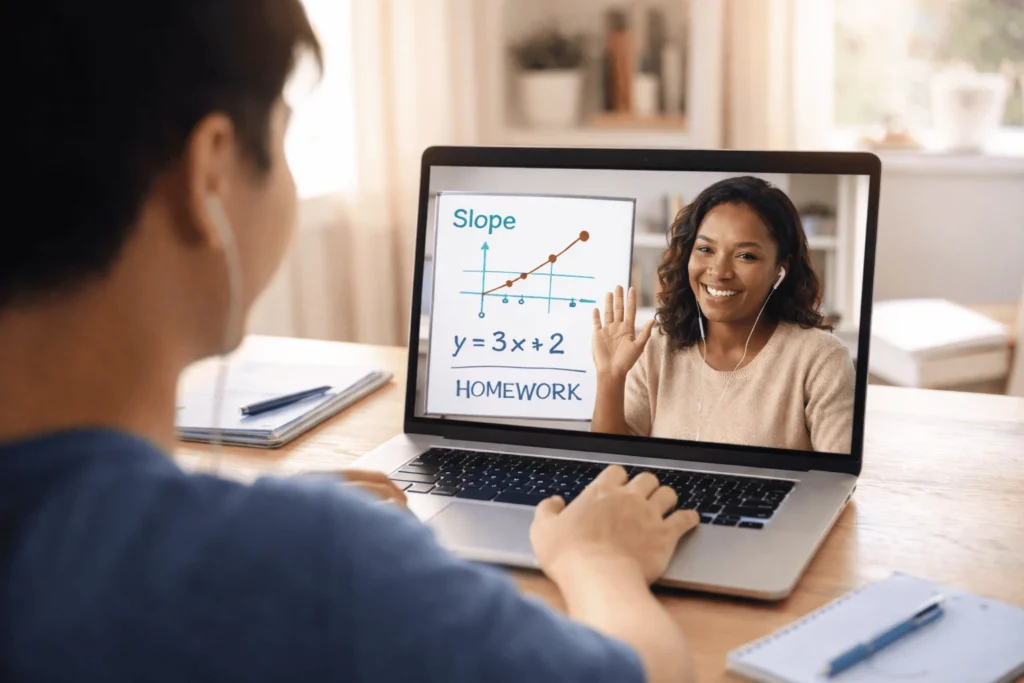
If you have knowledge in any subject — math, English, science, music, or even a language you speak — you can tutor students online. The global demand for online tutors has grown significantly since 2020 and continues to rise.
Where to find work: Preply, Tutor.com, Wyzant, and Chegg Tutors are well-known platforms. Many pay per hour and allow flexible scheduling.
Average learning time to first paid work: 1–2 weeks (if you already know the subject).
Skills vs. Platforms vs. Estimated Earnings: A Quick Comparison
Here’s a quick overview to help you compare your options. Please note: earnings vary widely based on experience, location of clients, and how consistently you work. These are general ranges, not guarantees.
| Online Skill | Best Platforms to Start | Beginner Learning Time | Typical Beginner Rate (USD/hr) | Difficulty Level |
|---|---|---|---|---|
| Freelance Writing | Upwork, Fiverr, ProBlogger | 4–8 weeks | $10–$25/hr | ⭐⭐ Easy–Medium |
| Graphic Design (Canva) | Fiverr, 99designs, PeoplePerHour | 3–6 weeks | $8–$20/hr | ⭐⭐ Easy–Medium |
| Social Media Management | LinkedIn, Upwork, local businesses | 4–8 weeks | $12–$25/hr | ⭐⭐ Easy–Medium |
| Virtual Assistant | Belay, Time Etc, Upwork | 2–4 weeks | $10–$20/hr | ⭐ Easy |
| Video Editing | Fiverr, Upwork, YouTube creators | 6–10 weeks | $12–$30/hr | ⭐⭐⭐ Medium |
| SEO Basics | Upwork, local businesses, agencies | 2–4 months | $15–$35/hr | ⭐⭐⭐ Medium |
| Transcription | Rev, TranscribeMe, GoTranscript | 1–3 weeks | $7–$15/hr | ⭐ Easy |
| Online Tutoring | Preply, Tutor.com, Wyzant | 1–2 weeks | $10–$30/hr | ⭐⭐ Easy–Medium |
How to Choose the Right Online Skill for You
With so many options, picking one can feel overwhelming. Here’s a simple framework I recommend to every beginner:
Step 1: Start With What You Already Know or Enjoy
If you love writing, start there. If you’re naturally organized, virtual assistant work could be a great fit. If you’ve always been visually creative, try graphic design. Your existing interests will keep you motivated during the learning curve.
Step 2: Match the Skill to Your Available Time
If you have 30 minutes a day, transcription or VA work are great starting points. If you can dedicate 1–2 hours daily, you can build writing or design skills faster. Be realistic — consistency over intensity is what really works.
Step 3: Learn First, Earn Later
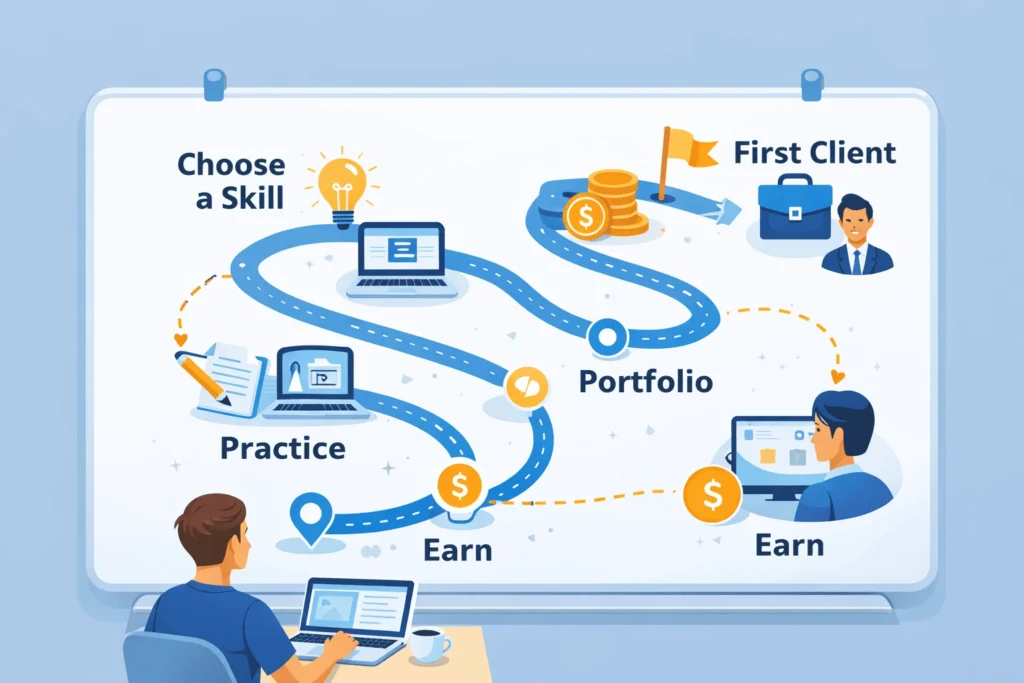
This is the step most beginners rush. Spend at least 3–4 weeks genuinely learning before you try to find clients. Build a small portfolio of sample work. This makes a massive difference in your confidence and your results.
Step 4: Start Small — One Platform, One Skill
Don’t try to learn five skills at once or join ten platforms. Pick one skill, join one platform, and focus for 60–90 days. Depth beats breadth every single time when you’re starting out.
Where Beginners Can Learn These Skills for Free (or Low Cost)
You don’t have to spend hundreds of dollars on courses to get started. Here are some genuinely useful, trustworthy platforms:
| Platform | What You Can Learn | Cost |
|---|---|---|
| Google Digital Garage | Digital marketing, SEO, data basics | Free (with certificates) |
| Coursera | Writing, design, business, tech | Free to audit / paid certificates |
| HubSpot Academy | Content marketing, SEO, social media | Free |
| YouTube | Everything — video editing, design, writing | Free |
| Canva Design School | Graphic design for beginners | Free |
| LinkedIn Learning | Business, tech, creative skills | Free trial / subscription |
| Skillshare | Creative and business skills | Free trial / subscription |
📌 Internal Link Suggestion: Top 10 Legit Online Jobs You Can Do From Home in 2026 — The Ultimate Beginner’s Guide
Frequently Asked Questions About Learning Online Skills in 2026
Can a complete beginner really earn money online without experience?
Yes — but with a realistic timeline. Most complete beginners who commit to learning a skill consistently can land their first small paid project within 1–3 months. The key word is commit. Dabbling for a week and giving up won’t work. Steady daily learning will.
What is the easiest online skill to learn for beginners?
Transcription and virtual assistant work tend to be the fastest entry points because they rely on skills most people already have — typing, attention to detail, and good communication. Canva-based graphic design is also very beginner-friendly. That said, the “easiest” skill is often the one that overlaps with your existing interests.
Do I need to invest money to start learning online skills?
Not necessarily. Most of the resources listed above are free. You’ll need a working laptop or desktop computer and a reliable internet connection. Beyond that, you can genuinely start without spending money. As you grow, investing in a paid course or tool can accelerate your progress — but it’s never required upfront.
How many hours per week should I dedicate to learning?
Even 30–60 minutes a day, 5 days a week, will make a meaningful difference over 2–3 months. Many successful freelancers started while working a full-time job or managing family responsibilities. The amount matters less than the consistency.
Which online skill has the highest income potential for beginners?
SEO, copywriting, and video editing tend to offer higher rates as your skills grow. However, the skill with the “highest income potential” for you personally is the one you actually stick with long enough to become genuinely good at. Focus on your skill, not just the paycheque.
Is it too late to start learning online skills in 2026?
Absolutely not. The demand for skilled digital workers continues to grow. If anything, beginners today have access to better free tools, better learning resources, and more client platforms than ever before. The best time to start was a year ago. The second best time is today.
Common Mistakes Beginners Make (And How to Avoid Them)
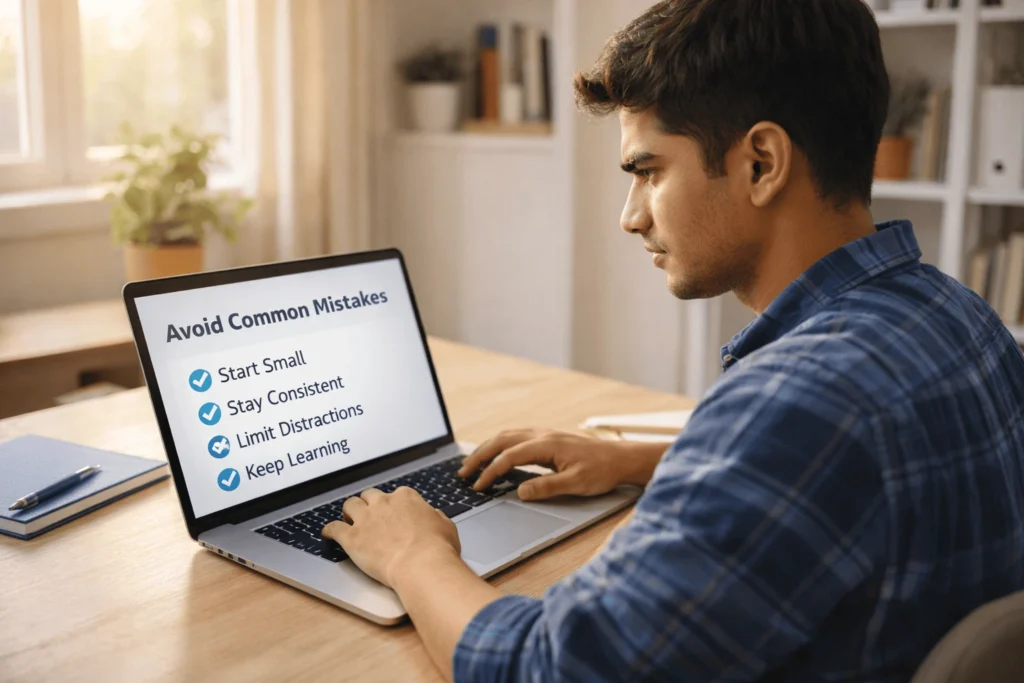
I want to be honest with you about the pitfalls I see beginners fall into — because avoiding these will save you months of frustration.
- Jumping between skills: Learning writing for two weeks, then switching to design, then switching to VA work gets you nowhere. Commit to one skill for at least 60 days before reassessing.
- Waiting until they feel “ready”: There’s no perfect moment. You don’t need 100% confidence before reaching out to your first client. Start with small, low-pressure projects.
- Pricing too low out of desperation: Charging $2 for a task that takes you 3 hours is not sustainable. Research typical beginner rates and value your time accordingly.
- Ignoring their portfolio: Clients can’t read your mind. A small portfolio — even 3–5 samples — immediately sets you apart from competitors with no examples to show.
- Expecting instant results: Building a legitimate online income takes time. Treat it like learning to drive — you won’t be perfect on day one, but with practice you’ll get there.
Final Thoughts: Your Online Journey Starts With One Skill
The most important decision you can make today isn’t which skill to learn — it’s the decision to actually start.
I’ve seen beginners from all walks of life — stay-at-home parents, recent graduates, people in between jobs, and retirees looking for extra income — build real, consistent online work by following a simple process: learn one skill, practice consistently, build a small portfolio, and reach out to clients.
There’s no magic formula. There’s no secret shortcut. But there is a clear path — and you’re already on it by educating yourself here today.
So here’s my honest encouragement to you: pick one skill from this list that excites you, spend 30 minutes today on a free learning resource, and make a commitment to give it 60 days of consistent effort. Not perfect effort — consistent effort.
You might surprise yourself with what you’re capable of.
📌 Internal Link Suggestion: Virtual Assistant Jobs: 7 Easy Steps for Beginners to Start From Home
🚀 Ready to Start Building Your Online Skills?
Explore more beginner-friendly guides, honest tips, and step-by-step resources right here on StartEarners.online. No hype. No fake promises. Just real, actionable advice.