Quick Summary: You don’t need years of experience to start freelancing. In this guide, you’ll learn exactly how to build a freelance portfolio from scratch — even if you’ve never had a paying client before — and how to attract your first opportunities the right way.

Let me be completely honest with you for a moment.
When I first searched “how to start freelancing,” I expected some kind of magic shortcut — a way to earn money fast, with zero effort. What I found instead was something far more valuable: a path that actually works, but only if you’re willing to put in real effort and build genuine skills.
If you’re reading this, you’re probably in one of these situations: you’ve just graduated, you’re between jobs, you’re a stay-at-home parent looking for flexible income, or you simply want to stop trading all your hours for a fixed salary. Whatever your reason, you’ve come to the right place.
Here’s the truth that most online “gurus” won’t tell you: your portfolio doesn’t need to be filled with paid projects to impress clients. What it needs is proof that you can do the work — and in 2026, there are more ways than ever to create that proof, starting from nothing.
This guide will walk you through every step, from choosing a skill to publishing your first portfolio and landing your first client. No hype. No fake income promises. Just a clear, honest, step-by-step plan for building a freelance portfolio with no experience.
📚 Related Reading:Top 10 Freelance Skills Beginners Can Learn in 2026 (Free Resources)
Contents
- 1 Why a Portfolio Matters More Than Your Resume in Freelancing
- 2 Step 1 — Choose the Right Freelance Skill for Beginners
- 3 Step 2 — Learn the Skill (Free Resources That Actually Work)
- 4 Step 3 — Create Portfolio Samples (Even With No Clients)
- 5 Step 4 — Choose Where to Host Your Freelance Portfolio
- 6 Step 5 — Write a Compelling Freelancer Bio and Profile
- 7 Step 6 — Find Your First Freelance Clients as a Beginner
- 8 Step 7 — Collect Testimonials and Keep Improving
- 9 Frequently Asked Questions About Building a Freelance Portfolio With No Experience
- 9.1 Can I really get freelance clients with no experience?
- 9.2 How long does it take to build a freelance portfolio from scratch?
- 9.3 Do I need to spend money to build a freelance portfolio?
- 9.4 What should I include in a beginner freelance portfolio?
- 9.5 What’s the best freelance platform for beginners in 2026?
- 9.6 How much can I realistically earn as a beginner freelancer?
- 10 Conclusion — Your Freelance Journey Starts With One Step
Why a Portfolio Matters More Than Your Resume in Freelancing
In the traditional job market, employers ask for a CV, references, and years of experience. Freelancing works completely differently. Clients don’t care where you went to school. They care about one thing: can you deliver results?
A portfolio is your proof of that. It’s a collection of your best work — real projects, sample projects, or practice pieces — that shows a potential client what you can create for them. Think of it like a window into your abilities.
Here’s something that surprises many beginners: even the world’s most successful freelancers started with zero clients. Every expert was once a beginner. The difference is they took action and built something to show, even before they had paying clients.
💡 Reality Check: You don’t need 10 years of experience to get your first freelance client. You need 3–5 solid portfolio pieces and the confidence to put yourself out there.
Step 1 — Choose the Right Freelance Skill for Beginners
Before you can build a portfolio, you need to decide what skill you want to offer. This is where many beginners get stuck — they either pick something random or try to do everything at once. Don’t make that mistake.
The best approach is to choose one skill that matches two things: what you’re genuinely interested in, and what the market actually needs.
Most In-Demand Freelance Skills in 2026
| Skill | Learning Time (Beginner) | Best Platforms to Offer It | Typical Beginner Rate |
|---|---|---|---|
| Copywriting & Content Writing | 4–8 weeks | Upwork, Fiverr, ProBlogger | $15–$35/hour |
| Graphic Design (Canva/Adobe) | 6–10 weeks | Fiverr, 99designs, Dribbble | $20–$50/hour |
| Social Media Management | 3–6 weeks | LinkedIn, Upwork, Freelancer | $300–$700/month per client |
| Virtual Assistant | 2–4 weeks | Upwork, Belay, Time Etc | $12–$25/hour |
| Video Editing | 8–12 weeks | Fiverr, Upwork, YouTube creators | $25–$60/hour |
| Web Design (No-Code) | 8–14 weeks | Upwork, Webflow Experts, Fiverr | $30–$75/hour |
| SEO & Digital Marketing | 6–12 weeks | Upwork, LinkedIn, local businesses | $20–$50/hour |
| AI Prompt Engineering | 4–8 weeks | PromptBase, Upwork, LinkedIn | $25–$60/hour |
Notice something? None of these require a university degree. All of them can be learned with free or low-cost resources online. The key is to pick one and commit to it for at least 60–90 days before switching.
✅ Pro Tip: If you’re completely unsure, content writing and social media management are two of the easiest entry points for beginners with zero technical background. Both are in constant demand across every industry.
📚 Related Reading:How to Learn Freelance Skills for Free in 2026 — Beginner’s Resource Guide
Step 2 — Learn the Skill (Free Resources That Actually Work)
Once you’ve chosen a skill, your next step is to actually develop it. You don’t need to spend thousands on courses. In 2026, the internet is full of high-quality, free learning resources that can take you from zero to job-ready.
Top Free Learning Platforms for Freelancers
- Google Digital Garage — Free certifications in digital marketing, analytics, and more
- Coursera (Audit Mode) — Access university-level courses in design, writing, coding, and business for free
- YouTube — Channels like Canva, HubSpot, and Moz have thousands of free tutorials
- Meta Blueprint — Free social media marketing training from Meta
- HubSpot Academy — Free certifications in content marketing, email, SEO, and more
- Skillshare (Free Trial) — Use the free trial strategically to complete 1–2 courses
The most important thing here isn’t finding the perfect course — it’s starting. Many beginners spend weeks “researching” learning options instead of actually learning. Give yourself a deadline: choose a resource and complete it within 30 days.

Step 3 — Create Portfolio Samples (Even With No Clients)
Here’s the big question every beginner asks: “How do I build a portfolio if no one has hired me yet?”
Great question. And the answer is simpler than you think.
You create the work yourself — practice projects, mock briefs, and sample pieces that demonstrate your skill. These are called spec work or sample projects, and they’re completely legitimate ways to fill your portfolio at the start.
How to Create Portfolio Samples Without Paid Clients
- Create mock projects: Design a logo for a made-up coffee shop. Write a blog post for a fictional travel brand. Build a sample landing page for an imaginary product. Clients don’t care if it was paid — they care if it’s good.
- Redesign existing work: Find a poorly designed local restaurant menu and redesign it. Rewrite a weak product description. Create a “before and after” to show your improvement skills.
- Volunteer for nonprofits or local businesses: Offer your services free or at a discount to a local charity, church, school, or small business in exchange for a testimonial. This gives you real-world experience and a genuine client reference.
- Offer free work to connections: Ask family members or friends who run small businesses if you can help with one project. A cousin’s bakery Instagram page is a real portfolio piece.
- Contribute to open-source or community projects: Writers can contribute to Wikipedia or community blogs. Designers can contribute to open-source tools. Developers can submit to GitHub projects.
⚠️ Important: Be honest in your portfolio about what’s a sample project and what was a real client project. Transparency builds trust, and clients appreciate honesty far more than they appreciate fake credentials.
How Many Portfolio Pieces Do You Need?
For most skills, 3 to 5 strong samples are enough to start applying for work. Quality always beats quantity. Three excellent pieces will outperform ten mediocre ones every time.
Step 4 — Choose Where to Host Your Freelance Portfolio
Once you have your samples ready, you need somewhere to display them. The good news is that in 2026, there are excellent free options for hosting your portfolio professionally.
Best Free Portfolio Platforms by Skill Type
| Platform | Best For | Cost | Ease of Setup |
|---|---|---|---|
| Contra | All freelancers, especially beginners | Free | ⭐⭐⭐⭐⭐ Very Easy |
| Behance | Designers, photographers, creatives | Free | ⭐⭐⭐⭐ Easy |
| Journo Portfolio | Writers, journalists, bloggers | Free / Paid | ⭐⭐⭐⭐⭐ Very Easy |
| Dribbble | UI/UX and graphic designers | Free | ⭐⭐⭐⭐ Easy |
| GitHub Pages | Web developers, coders | Free | ⭐⭐⭐ Moderate |
| Notion (Portfolio Page) | Writers, VAs, general freelancers | Free | ⭐⭐⭐⭐⭐ Very Easy |
| Wix / Carrd | Any freelancer wanting a personal site | Free / Paid | ⭐⭐⭐⭐ Easy |
| LinkedIn Featured Section | All professionals, especially VAs & marketers | Free | ⭐⭐⭐⭐⭐ Very Easy |
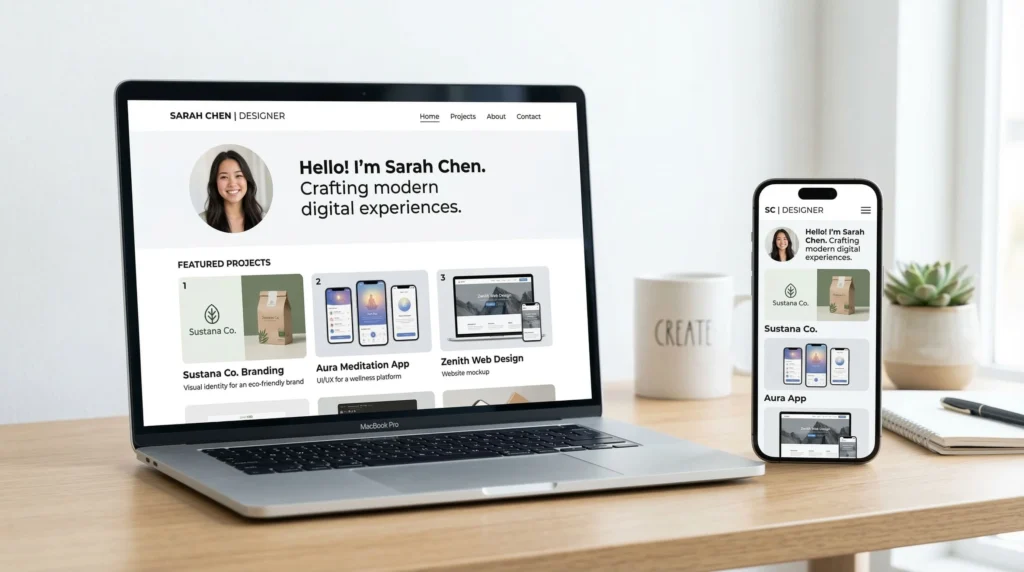
You don’t need to build a fancy website to start. A simple, clean Notion page or a Behance profile with 3–5 organized samples is more than enough to get your first client. Focus on clarity and professionalism over flashy design.
Step 5 — Write a Compelling Freelancer Bio and Profile
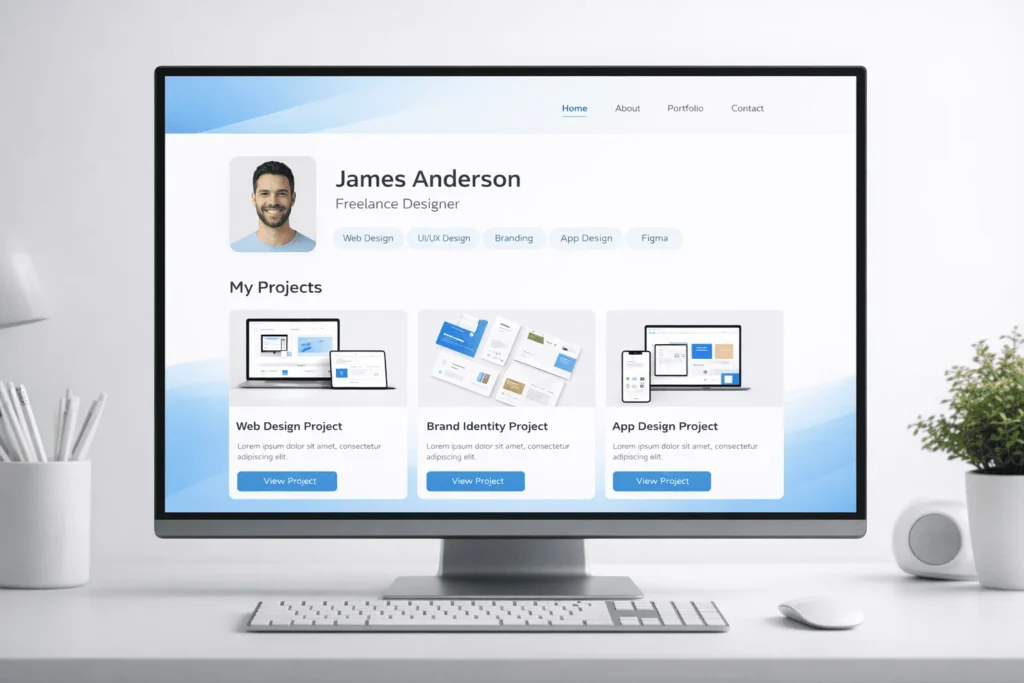
Your portfolio isn’t just your work samples. It’s also your story. The way you present yourself in your bio, headline, and service descriptions makes a huge difference in whether clients contact you or scroll past you.
What to Include in Your Freelancer Bio (Even With No Experience)
- Who you are — your name, location (optional), and what you do
- What you offer — specific services, not vague descriptions (“I write SEO blog posts for health and wellness brands” is better than “I write content”)
- Why you chose this — a brief, honest statement about your motivation
- Any relevant training or certifications — even free ones count (HubSpot, Google, Meta Blueprint)
- A clear call to action — tell potential clients how to reach you
Here’s a simple bio formula that works well for beginners:
“Hi, I’m [Name] — a [skill] specialist helping [target client type] with [specific result]. I’ve completed [X] projects including [brief example]. I’m passionate about [topic] and I’m currently accepting new clients. Let’s talk!”
Short, specific, and human. That’s all you need to start.
Step 6 — Find Your First Freelance Clients as a Beginner
Building the portfolio is one part of the puzzle. The next step is actually getting it in front of potential clients. Here are the most effective strategies for beginners in 2026.
Best Places to Find Freelance Work With No Experience
| Platform | Best Skill Match | Competition Level | Beginner Friendly? |
|---|---|---|---|
| Fiverr | Design, writing, video, VA | High | ✅ Yes — start with competitive pricing |
| Upwork | All skills | High | ⚠️ Moderate — needs strong profile |
| Contra | All skills, especially tech & creative | Medium | ✅ Very beginner-friendly |
| PeoplePerHour | Writing, design, coding | Medium | ✅ Yes |
| B2B services, VA, marketing, writing | Low (if active) | ✅ Great for organic outreach | |
| Facebook Groups | General freelancing | Low | ✅ Great for beginners |
| Local Businesses | Social media, web design, content | Very Low | ✅ Excellent starting point |
A Simple Outreach Strategy That Works
Instead of waiting for clients to find you, go to them. Here’s a simple, non-pushy outreach approach that works well for beginners:
- Find a small local business or online brand that could benefit from your skill.
- Look at what they’re currently doing (e.g., their social media, website content, blog).
- Identify one specific area where you could add value.
- Send a short, friendly message explaining what you noticed and how you could help.
- Offer to do a small free or discounted test project to prove your value.
This approach — sometimes called “warm outreach” — works because it’s specific, relevant, and non-pushy. You’re not begging for work; you’re offering genuine value.
✅ Beginner Tip: Facebook Groups are underrated gold mines for beginner freelancers. Search for groups like “Virtual Assistant Jobs,” “Freelance Writing Opportunities,” or “[Your Skill] Jobs” and you’ll find real clients posting real opportunities every single day.

📚 Related Reading: Freelance Writing for Beginners 2026: How to Start, Build Skills, and Earn Online the Right Way
Step 7 — Collect Testimonials and Keep Improving
After completing your first project — whether it’s free, discounted, or paid — always ask for a testimonial. A genuine written review from even one client carries enormous weight for future prospects.
Here’s a simple message you can send after completing a project:
“Thank you so much for the opportunity to work on this project! If you’re happy with the result, I’d really appreciate a short written testimonial I could share on my portfolio. Even just a sentence or two about your experience working with me would mean a lot. Thank you!”
Most people are happy to do this if you ask politely and the work was good. Over time, these testimonials become one of your most powerful marketing tools.
How to Continuously Improve Your Portfolio
- Replace old, weaker samples with stronger, newer work every few months
- Add new skills as you develop them
- Update your rates as your experience grows
- Ask clients for case studies — descriptions of the problem, your solution, and the result
- Track your results (e.g., “Blog post I wrote increased traffic by 30%”) and include them in your portfolio
Frequently Asked Questions About Building a Freelance Portfolio With No Experience
Can I really get freelance clients with no experience?
Yes, absolutely. Many successful freelancers started with zero paid experience. The key is creating sample work that demonstrates your skill, being transparent about where you are in your journey, and offering strong value at the start — sometimes at a lower rate — to build your track record. Experience comes from doing the work, not from waiting until you feel “ready.”
How long does it take to build a freelance portfolio from scratch?
For most beginners, you can have a basic but professional portfolio ready within 4 to 8 weeks if you commit 1–2 hours per day. This includes time to learn the skill, create 3–5 sample pieces, and set up your portfolio page. Getting your first paying client typically takes another 2–8 weeks depending on how actively you’re applying and promoting yourself.
Do I need to spend money to build a freelance portfolio?
No. You can build a legitimate, professional portfolio for free. Free platforms like Behance, Contra, Notion, and LinkedIn allow you to showcase your work without paying anything. Free learning platforms like Google Digital Garage and HubSpot Academy let you develop skills and earn certificates at no cost. Starting completely free is possible and practical.
What should I include in a beginner freelance portfolio?
Include 3–5 of your best work samples (real or practice projects), a clear bio explaining who you are and what you offer, any certifications or training you’ve completed, testimonials if you have them, and a clear way for potential clients to contact you. Keep it focused and clean — don’t try to include everything.
What’s the best freelance platform for beginners in 2026?
For most beginners, Fiverr, Contra, and LinkedIn are the most accessible starting points. Fiverr is especially good for creative skills like design and writing. Contra is newer and less saturated, making it beginner-friendly. LinkedIn works well for professional services like VA work, social media management, and B2B writing. Try one platform first and master it before expanding.
How much can I realistically earn as a beginner freelancer?
This varies widely by skill, location, and how much time you put in. Realistically, many beginners earn between $300 and $1,000 in their first one to three months while building their client base. With consistent effort, this often grows to $1,500–$3,000+ per month within 6–12 months. Freelancing takes time to build — treat it like a real business, not a lottery ticket.

Conclusion — Your Freelance Journey Starts With One Step
Let me leave you with this: every single successful freelancer you admire online was once exactly where you are right now — no clients, no portfolio, no idea where to start.
The difference between those who make it and those who don’t isn’t talent. It’s consistency. It’s showing up every day to learn, improve, and put yourself out there — even when it feels uncomfortable.
You don’t need to be perfect. You need to be real, skilled enough to deliver value, and committed enough to keep going after setbacks.
Here’s your action plan to start today:
- Choose one freelance skill that excites you
- Spend 30 days learning it through free resources
- Create 3 sample portfolio pieces
- Set up a free portfolio page on Contra, Behance, or Notion
- Send your first 5 outreach messages this week
That’s it. Five steps. One day at a time. Build skills, build trust, build your future — the right way.
📌 Start learning today. Your future clients are already out there looking for someone exactly like you.
📚 Continue Learning: Top 15 Freelancing Tips for Beginners to Succeed Fast
🚀 Ready to Start Your Freelance Journey?
Explore more beginner-friendly guides, skill tutorials, and honest income strategies on StartEarners.online.
Build skills. Build your portfolio. Build your future — step by step.
© 2026 StartEarners.online — Educational content for beginner online earners. No income is guaranteed. Results vary by individual effort, skill level, and market conditions.