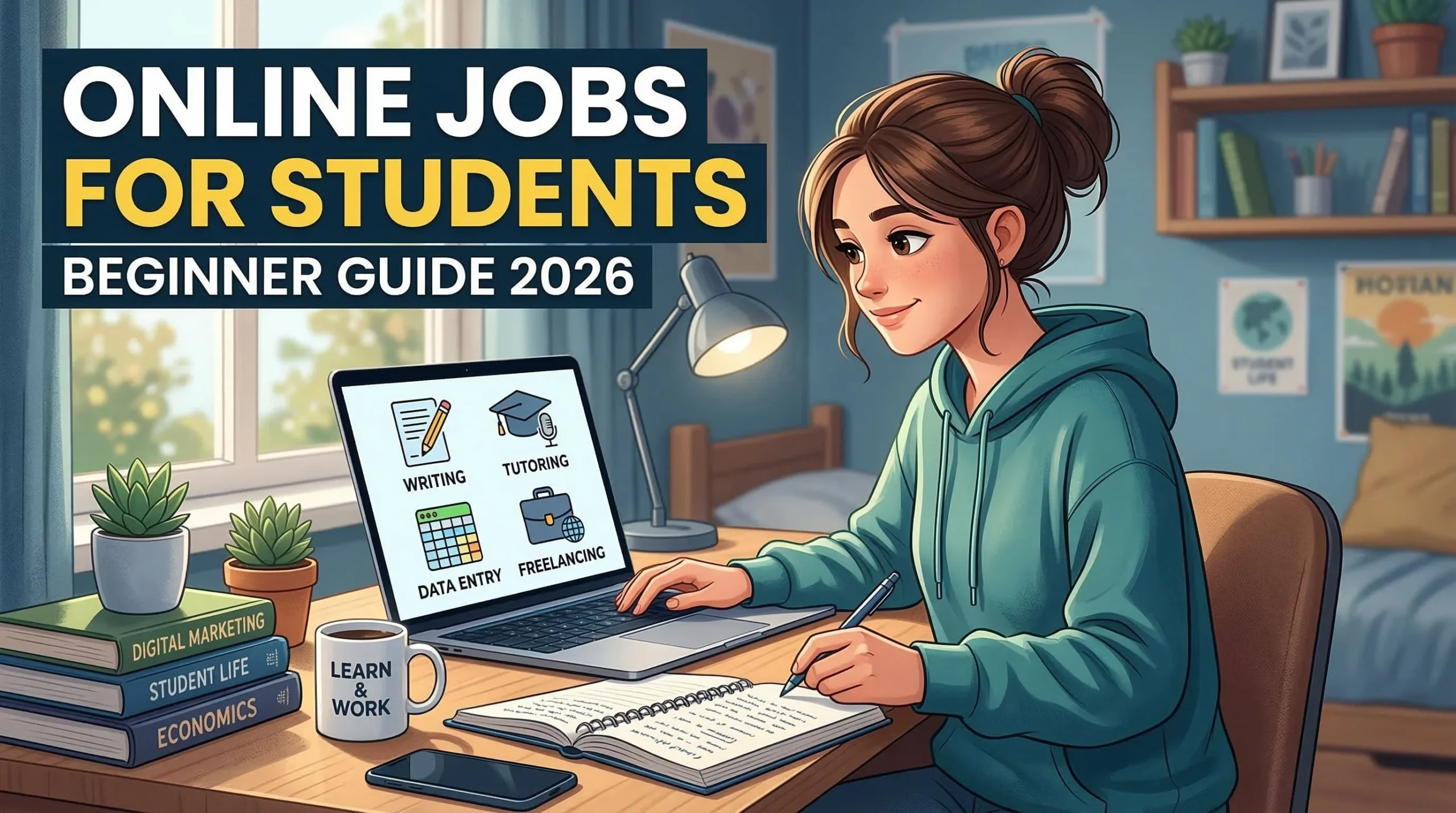
Let me be honest with you right from the start.
When I first searched for “online jobs for students,” I found page after page of big promises — “earn $500 a day!” or “make $1000 this weekend!” None of it was real. Most of it was noise.
But here’s what IS real: thousands of students around the world — in the US, UK, Australia, Canada, and beyond — are quietly building income online, one small skill at a time. Not by getting lucky, but by learning, practicing, and showing up consistently.
This guide is for you if you are a complete beginner, a high school or college student, someone with zero experience, or just someone who wants to earn honestly without being tricked. I will walk you through everything — what jobs exist, what skills you need, how much you can realistically earn, and how to avoid scams.
No hype. No fake promises. Just real, honest information.
15 Remote Jobs You Can Do From Home in 2026 (Beginner’s Honest Guide)
Contents
- 1 What Are Online Student Jobs? (And Why They’re Different Now)
- 2 Best Online Jobs for College Students With No Experience
- 3 How Much Can Students Earn? Realistic Income Comparison
- 4 Do Online Jobs for Students Require Special Skills or Training?
- 5 What Equipment Do I Need to Start Online Jobs as a Student?
- 6 Are Online Jobs for College Students Flexible Around Class Schedules?
- 7 How to Find Remote Work for University Students: Step-by-Step
- 8 How Do Students Avoid Scams When Applying for Online Jobs?
- 9 What Online Jobs Help Students Build Resume Skills for Future Careers?
- 10 Can High School Students Do Online Jobs?
- 11 Free Resources to Build Skills for Student-Friendly Online Jobs
- 12 Time Management Tips for Student Online Workers
- 13 How to Build a Portfolio for Your Student Freelance Career
- 14 Final Thoughts: Start Learning, Start Earning
- 15 Frequently Asked Questions (FAQs)
- 15.1 What are the best online jobs for students with no experience?
- 15.2 How many hours can students legally work online part-time?
- 15.3 Is it safe to find online jobs for students on freelance platforms?
- 15.4 What free resources teach skills for student-friendly online jobs?
- 15.5 Are there online jobs for students available during exam seasons?
What Are Online Student Jobs? (And Why They’re Different Now)
Online student jobs are flexible, part-time work opportunities that you can do from a laptop or phone, on your own schedule, without needing to commute. They range from simple micro-tasks to skilled freelance work.
What makes 2025 different is that the barrier to entry has never been lower. Platforms like Fiverr, Upwork, and Coursera have made it possible for a 19-year-old in their dorm room to offer services to clients in New York, London, or Sydney.
But here’s the key truth most sites won’t tell you: the students who succeed are the ones who treat online work as a skill-building journey, not a shortcut to quick cash. The income grows as the skills grow.
Best Online Jobs for College Students With No Experience
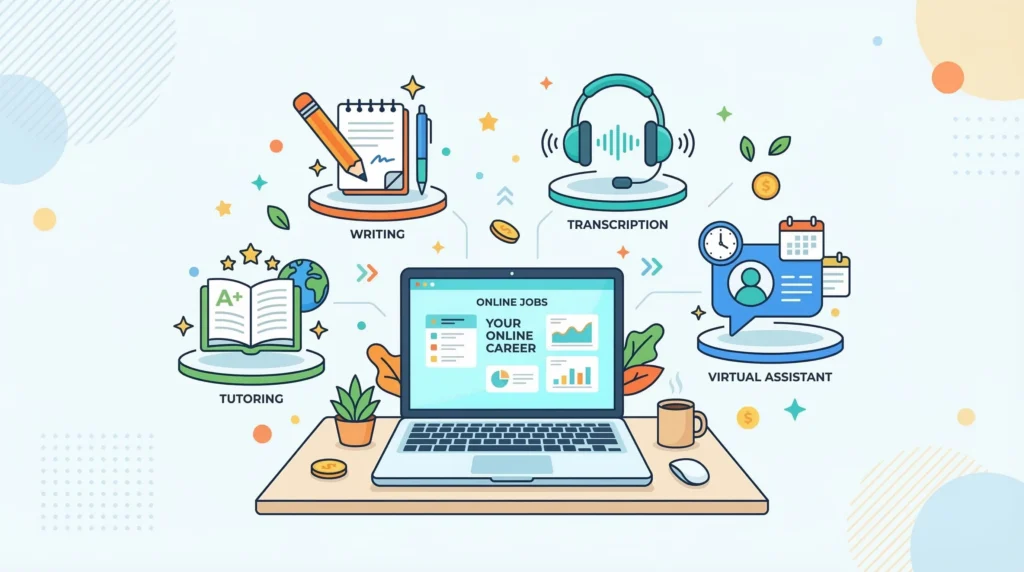
You don’t need a degree or years of experience to start. Here are the most beginner-friendly online student jobs available today:
1. Online Tutoring
If you are strong in any subject — math, English, science, history — you can tutor younger students online. Platforms like Tutor.com, Wyzant, and Preply connect students with learners. You don’t need to be an expert — you just need to be one or two steps ahead of the person you’re helping.
Typical earnings: $10–$30/hour for beginners, $40–$80/hour as you build reviews.
2. Freelance Content Writing
Content writing is one of the most accessible beginner student jobs because every website on the internet needs written content. Blog posts, product descriptions, social media captions — businesses pay writers for all of it.
You can start on platforms like Fiverr or ProBlogger. Even a beginner writer can earn $15–$50 per article. As your portfolio grows, so does your rate.
3. Data Entry Tasks
Data entry is ideal for students who want simple, low-stress work from their dorms or home. Tasks usually involve entering information into spreadsheets or databases. Sites like Amazon Mechanical Turk, Clickworker, and Lionbridge offer these opportunities.
Earnings are modest — usually $5–$15/hour — but it’s a great starting point with zero experience required.
4. Transcription Work
Transcription means listening to audio recordings and typing out what is said. It’s a great way for students to practice their typing skills while earning. Rev.com and TranscribeMe are popular entry points.
Beginners earn around $0.45–$0.75 per audio minute. It’s not huge, but it’s real, honest income while you build speed and accuracy.
5. Virtual Assistant Work
A virtual assistant (VA) helps businesses with tasks like managing emails, scheduling, research, and social media. It’s one of the most in-demand student freelance gigs right now. Platforms like Belay, Time Etc, and Fancy Hands are good starting points.
VAs typically earn $12–$20/hour as beginners, and significantly more as experienced specialists.
6. Social Media Tasks
Many small business owners need help managing their Instagram, Facebook, or TikTok pages. If you already spend time on social media, this could become a legitimate side hustle for learners. Tasks might include scheduling posts, replying to comments, or creating simple graphics.
7. Microtasks and Survey Platforms
Sites like Swagbucks, InboxDollars, and Prolific offer microtasks and paid surveys. The earnings are small — think pocket money, not rent money — but they’re a real, low-effort way to start building confidence with online earning.
How Much Can Students Earn? Realistic Income Comparison
Here is an honest breakdown of what beginner students can realistically expect when starting out:
| Job Type | Beginner Earnings | With 6 Months Experience | Platform Examples |
| Online Tutoring | $10–$25/hr | $35–$80/hr | Preply, Wyzant, Tutor.com |
| Content Writing | $10–$30/article | $50–$150/article | Fiverr, ProBlogger, Contena |
| Data Entry | $5–$12/hr | $12–$18/hr | Clickworker, MTurk, Lionbridge |
| Transcription | $3–$8/hr | $10–$20/hr | Rev.com, TranscribeMe, GoTranscript |
| Virtual Assistant | $10–$18/hr | $20–$45/hr | Belay, Time Etc, Fancy Hands |
| Social Media Tasks | $8–$15/hr | $20–$50/hr | Fiverr, Direct clients, Upwork |
| Microtasks / Surveys | $1–$5/hr | $3–$8/hr | Swagbucks, Prolific, InboxDollars |
Note: These figures are realistic averages for English-speaking global markets. Actual earnings depend on your skills, effort, and consistency. Nobody earns top rates on day one — that is normal and expected.
25 Online Jobs That Pay Beginners in 2026 (No Experience Needed)
Do Online Jobs for Students Require Special Skills or Training?
This is one of the most common questions beginners ask, and the honest answer is: it depends on the job, but most beginner roles require very little to start — and what matters more is your willingness to learn.
Here is a simple breakdown:
| Job Type | Skills Needed to Start | Where to Learn Free |
| Content Writing | Basic English, grammar, research | Google Digital Garage, HubSpot Academy |
| Tutoring | Knowledge of your subject | Khan Academy (to refresh your knowledge) |
| Data Entry | Typing speed, attention to detail | TypingClub.com (free typing trainer) |
| Transcription | Good hearing, typing accuracy | Free practice files on Rev.com |
| Virtual Assistant | Organisation, email, basic tools | Coursera, Alison.com, YouTube |
| Social Media Mgmt | Creativity, platform familiarity | Meta Blueprint, Hootsuite Academy |
The good news? Almost all of the platforms listed above offer free courses. You could spend two to four weeks learning a skill before you even apply for your first gig — and that small investment of time pays off for years.
What Equipment Do I Need to Start Online Jobs as a Student?
One of the best things about remote jobs for students is that the startup cost is almost zero. Here is what you actually need:
- A laptop or desktop computer (even a basic, older model works for most beginner jobs)
- A reliable internet connection
- A free email address and a free account on one or two platforms
- Headphones with a microphone (useful for tutoring and transcription — you can get decent ones for under $20)
- A quiet workspace — your dorm room, bedroom, or a library study space works perfectly
You do NOT need: a professional studio, expensive software, a new computer, or any paid subscriptions to start. Most students begin with exactly what they already have.
Are Online Jobs for College Students Flexible Around Class Schedules?
Flexibility is the number one reason students choose online work — and yes, most online student jobs are designed to work around your life, not the other way around.
Here is what flexibility looks like in practice:
- Freelance writing: you choose your own deadlines (within reason)
- Tutoring: you set your available hours on the platform
- Data entry and microtasks: you log in and work whenever you have free time
- Virtual assistant roles: often part-time, 5–15 hours per week
- Transcription: work at 2am if that suits you — no fixed schedule
During exam seasons, you can simply reduce your availability or take a short break from freelance work. Most platforms allow this without any penalty. This is a major advantage over traditional part-time campus jobs.
Online Skills Beginners Can Learn in 2026 (A Realistic Step-by-Step Guide)
How to Find Remote Work for University Students: Step-by-Step
Here is a practical, honest guide to getting your first online job as a student:
- Choose ONE job type to start. Don’t try to do everything at once. Pick the role that matches your current skills and interests.
- Spend 1–2 weeks learning the basics for free. Use the free resources in the skills table above.
- Create a profile on one platform. Fiverr is good for writers and VAs. Preply or Tutor.com for tutors. Rev.com for transcription.
- Complete your profile fully. Add a clear photo, a short honest description, and any samples or examples of your work.
- Apply for or offer beginner-level rates. Don’t be proud. Your first goal is reviews and experience, not maximum income.
- Deliver excellent work, get your first review, then gradually increase your rates.
- Keep learning. The students who earn the most are the ones who never stop improving their skills.
How Do Students Avoid Scams When Applying for Online Jobs?
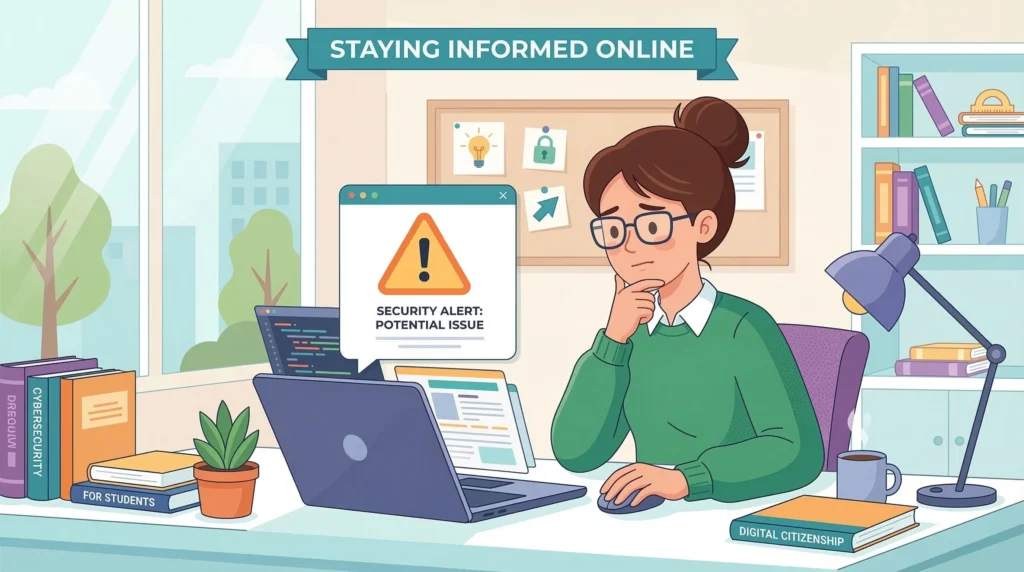
This is critical information. Unfortunately, wherever there are beginners looking for online jobs, there are also people trying to trick them. Here is how to protect yourself:
Red Flags to Watch For
- Anyone asking you to pay money before you can start working — legitimate jobs never charge you upfront
- Promises of unrealistically high income (“earn $500/day from home with no skills”)
- Requests for your bank account or national ID number before you have signed any contract
- Jobs advertised only on WhatsApp or Telegram with no verifiable company website
- Employers who contact you out of nowhere offering a job you never applied for
Green Flags (Signs of a Legitimate Opportunity)
- The platform has a verifiable website, real reviews, and a history (Fiverr, Upwork, Rev, Preply)
- Payment is handled through the platform, not directly to a personal account
- The job description is clear, realistic, and specific
- You are paid for completed work, not asked to invest or recruit others
A simple rule: if something feels too good to be true, it almost certainly is. Stick to well-known platforms when you are starting out.
Virtual Assistant Jobs: 7 Easy Steps for Beginners to Start From Home
What Online Jobs Help Students Build Resume Skills for Future Careers?
Here is something most guides miss: the best online jobs for students are not just about earning money today — they are about building the skills that employers will pay for tomorrow.
| Online Job | Skills You Build | Career Paths It Opens |
| Content Writing | Research, communication, SEO | Journalism, Marketing, PR, Content Strategy |
| Tutoring | Teaching, patience, explanation | Education, Training, Coaching, HR |
| Virtual Assistant | Organisation, tools, communication | Project Management, Admin, Executive roles |
| Transcription | Listening, typing speed, accuracy | Legal, Medical, Media industries |
| Social Media Mgmt | Strategy, creativity, analytics | Digital Marketing, Brand Management |
| Data Entry | Accuracy, spreadsheets, focus | Data Analysis, Admin, Finance |
When you apply for your first real job after graduation, you will not just have a degree — you will have a portfolio of real work, verified client reviews, and genuine professional experience. That is a powerful advantage.
Top 10 Legit Online Jobs You Can Do From Home in 2026 — The Ultimate Beginner’s Guide
Can High School Students Do Online Jobs?
Yes — with some important caveats. Many online platforms require users to be at least 18 years old to create an account and receive payments. However, there are still legitimate options for younger students:
- Tutoring younger children in your community or through supervised family arrangements
- Creating content on YouTube or a blog (with parental guidance and consent)
- Participating in paid research studies on platforms like Prolific, which accepts users from 16+ in some regions
- Helping local small businesses with social media content creation under parental supervision
If you are under 18, always involve a parent or guardian. Some platforms allow minors to register with parental consent. Read the Terms of Service carefully before signing up.
Free Resources to Build Skills for Student-Friendly Online Jobs
You do not need to pay for expensive courses to get started. Here are the best free platforms to build the skills employers and clients actually want:
- Google Digital Garage — digital marketing, data, and career skills
- HubSpot Academy — free content writing, SEO, and marketing certifications
- Coursera (audit for free) — university-level courses in almost any subject
- Alison.com — free diplomas in IT, business, health, and language
- Khan Academy — academic subjects for tutors to refresh their knowledge
- TypingClub.com — free typing speed and accuracy practice
- Rev.com Free Practice — transcription sample files for practice
- Meta Blueprint — free Facebook and Instagram marketing training
- YouTube — honestly, one of the best free learning resources for any skill
Spend two to four weeks on any one of these resources before you start applying for work. That small time investment will make a real difference in the quality of your applications and the confidence you bring to clients.
Online Jobs From Home: The Complete Beginner’s Guide to Remote Work in 2026
Time Management Tips for Student Online Workers
One of the biggest challenges students face is not finding the work — it is managing their time well enough to do the work, study effectively, and still have a life. Here are some practical strategies:
- Set specific ‘work hours’ each week and treat them like a class you cannot miss
- Use a simple planner or free app like Google Calendar to block time for studying vs. working
- During exam periods, reduce your online work hours in advance — communicate this to clients early
- Start with no more than 5–10 hours of paid work per week while you are getting started
- Track your income, hours, and progress weekly so you can see real growth over time
- Take breaks — burnout is real, and consistency over months matters more than intensity for a few days
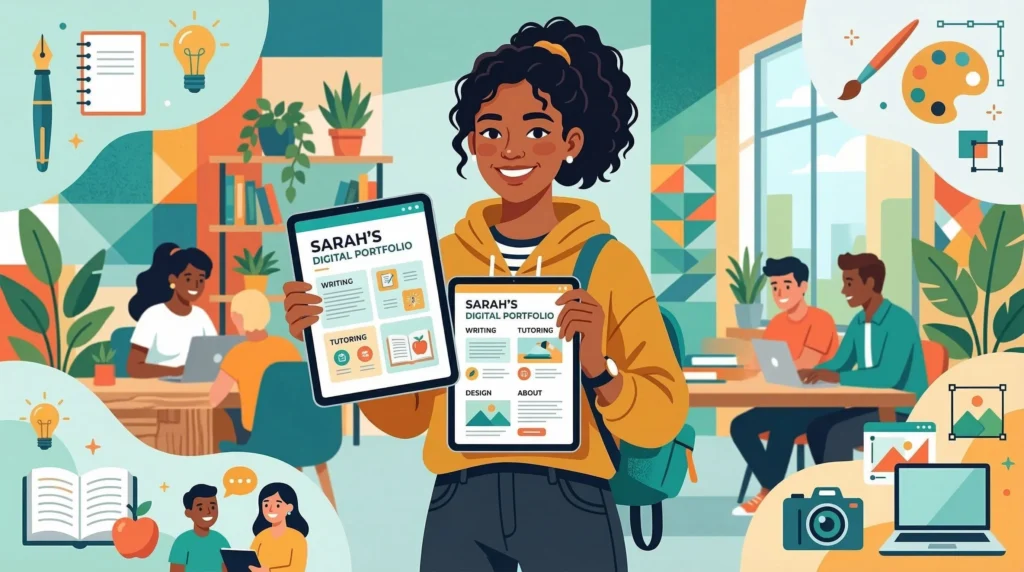
How to Build a Portfolio for Your Student Freelance Career
When you are starting out with no formal experience, your portfolio is your most important asset. It is how you prove to clients that you can actually do the work.
Here’s how to build one from scratch:
- Do 2–3 free or discounted projects just to get real examples. Offer to write a blog post for a local business or tutor a friend’s sibling for free.
- Create samples. Write three practice articles. Record a sample tutoring session. Transcribe a free audio file.
- Upload your samples to a free Google Drive folder or a simple free website (Google Sites or Carrd.co).
- Include your portfolio link in every profile and application. Clients want to see evidence, not just promises.
Remote Jobs for Beginners: Ultimate Guide to Building a Successful Work From Home Career in 2026
Final Thoughts: Start Learning, Start Earning
Online jobs for students are real, accessible, and genuinely life-changing — but only if you approach them the right way.
The students who succeed are not the ones who found a magic shortcut. They are the ones who chose one skill, learned it honestly, built a portfolio step by step, and kept going even when early earnings were small.
The money grows as the skill grows. And the skills you build today — writing, communication, organisation, research, digital tools — will serve you for your entire career, long after you have graduated.
So start today. Not to get rich. But to learn, grow, and build something real.
📚 Read Next: Our Free Guide to Freelancing Skills for Beginners
💻 Start learning today at StartEarners.online — your step-by-step guide to honest online income.
Frequently Asked Questions (FAQs)
These questions are answered naturally throughout this article, but here is a quick-reference summary for readers:
What are the best online jobs for students with no experience?
Data entry, transcription, content writing, and microtasks are the most beginner-friendly. They require minimal skills and have free training available.
How many hours can students legally work online part-time?
Online freelance work is self-employed work, so there are no legal hour limits for most countries. Most students start with 5–15 hours per week to balance studies effectively.
Is it safe to find online jobs for students on freelance platforms?
Yes, if you use established platforms like Fiverr, Upwork, Rev.com, and Preply. Avoid any opportunity that asks you to pay before you start or promises unrealistic income.
What free resources teach skills for student-friendly online jobs?
Google Digital Garage, HubSpot Academy, Alison.com, Coursera (audit), Khan Academy, and YouTube are all excellent free starting points.
Are there online jobs for students available during exam seasons?
Yes. Most online freelance work is asynchronous, meaning you control when you work. You can reduce hours during exams and increase them during breaks.