
Have you ever thought about earning money through writing — but had no idea where to begin?
You are not alone. Every year, thousands of beginners search for honest, realistic ways to earn online. Freelance writing is one of the most accessible paths available today. You do not need a journalism degree. You do not need fancy equipment. What you do need is a willingness to learn, practice, and stay consistent.
This guide will walk you through everything you need to know about starting freelance writing from scratch — the skills, the platforms, the portfolio-building, the pitfalls, and the realistic income you can expect. No hype, no fake promises. Just clear, honest steps.
Internal link suggestion: The Easiest Data Entry Skills Beginners Need to Start Earning Online from Home in 2026
Contents
- 1 What Is Freelance Writing, and Is It Right for You?
- 2 How to Start Freelance Writing With No Experience
- 3 Where Can You Find Your First Freelance Writing Clients?
- 4 What Skills Do You Need to Become a Freelance Writer?
- 5 How to Build a Freelance Writing Portfolio From Scratch
- 6 How Much Can Beginners Earn From Freelance Writing?
- 7 What Is the Best Niche for New Freelance Writers?
- 8 How to Pitch Articles to Editors and Clients
- 9 How to Set Your Rates as a New Freelance Writer
- 10 Common Mistakes Beginners Make in Freelance Writing
- 11 How to Manage Time as a Freelance Writer
- 12 Should You Start a Blog to Practice Freelance Writing?
- 13 Frequently Asked Questions About Freelance Writing
- 14 Final Thoughts: Build Skills First, Income Follows
What Is Freelance Writing, and Is It Right for You?
Freelance writing means writing content for clients — businesses, blogs, websites, or publications — on a project-by-project basis. You work independently, choosing your own hours and clients. You are essentially running a small one-person writing service.
Freelance writers create blog posts, articles, product descriptions, newsletters, social media captions, website copy, and much more. As long as businesses and individuals need content online (and they always will), there is demand for skilled writers.
Is it right for you? Ask yourself: Do you enjoy putting ideas into words? Are you patient enough to improve your craft over weeks and months? If yes, freelance writing is absolutely worth exploring.
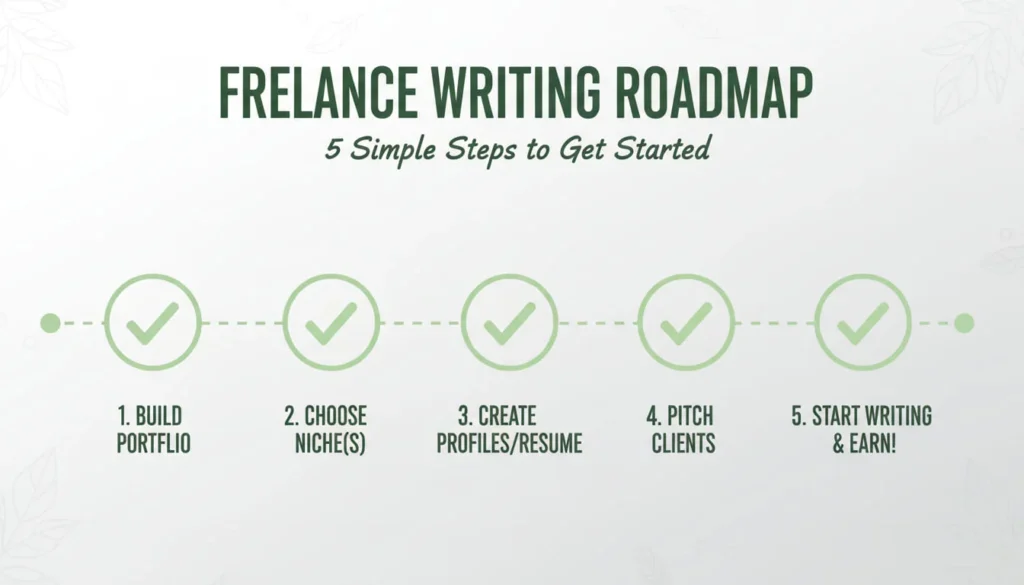
How to Start Freelance Writing With No Experience
This is the most common question beginners ask — and the good news is that starting with zero experience is completely possible. Here is a step-by-step approach:
Step 1: Choose a Writing Niche
A niche is simply a topic area you focus on. Writing about everything makes it hard to stand out. Writing about one or two topics consistently helps you grow faster and attract the right clients.
Popular beginner-friendly niches include personal finance, health and wellness, technology, travel, and digital marketing. Choose something you already know a little about or are genuinely curious to learn.
Step 2: Learn the Basics of Writing for the Web
Web writing is different from academic writing. Sentences are shorter. Paragraphs are broken up. Readers skim. You will want to learn how to write clear introductions, use subheadings effectively, and make your content easy to read on a phone screen.
Free resources like Copyblogger, HubSpot Blog, and the Hemingway Editor app are great starting tools.
Step 3: Create Writing Samples
Before you can pitch to clients, you need samples to show them. You do not need paid work to create them. Write 2 to 3 articles on topics in your niche and publish them on a free platform like Medium or a personal blog. These become your writing portfolio.
Step 4: Set Up a Simple Portfolio
Create a free portfolio using Google Docs, Journo Portfolio, or Contently. Link your writing samples there. This is the page you will share with every potential client.
Step 5: Apply to Your First Gig
You do not need to cold-pitch immediately. Start with beginner-friendly freelance platforms where clients post jobs you can apply for directly.
Where Can You Find Your First Freelance Writing Clients?
Finding clients is the part most beginners struggle with. The key is to start where competition is manageable and work your way up. Here are some places to begin:
- Upwork: One of the largest freelancing platforms. Competitive, but great for building your track record.
- Fiverr: You create a gig listing and clients come to you. Good for beginners who want to avoid cold outreach.
- ProBlogger Job Board: A niche board specifically for blogging and writing jobs.
- Contena: Paid membership platform with curated freelance writing jobs.
- LinkedIn: Many businesses post writing roles or accept direct messages from writers.
- Cold email: Research small businesses, startups, or blogs in your niche and pitch them directly.
Start with one or two platforms. Master them before spreading your efforts too thin.
What Skills Do You Need to Become a Freelance Writer?
Freelance writing success depends on more than just grammar. Here are the core freelance writing skills you will need to develop over time:
Writing and Editing
You need to write clearly and revise your work carefully. Every piece you deliver should be free of errors and easy to read.
Research
Most writing jobs require you to research topics you may not be an expert in. Learning how to find credible sources quickly is a valuable skill that sets good writers apart.
SEO Basics
Many clients want their content to rank on Google. Understanding SEO basics for freelance writers — like how to use keywords naturally, write SEO-friendly titles, and structure content properly — makes you more valuable.
Time Management
Clients give deadlines. Meeting them consistently builds trust and leads to repeat work. Good time management for freelance writers means knowing how long tasks take you and setting realistic expectations.
Communication
Responding quickly, asking the right questions, and keeping clients updated shows professionalism. Many clients will choose a slightly less experienced writer who communicates well over a more skilled writer who is hard to reach.
| Skill | Why It Matters | How to Build It |
| Clear Writing | Your product — weak writing loses clients | Write daily, read widely |
| Research | Accuracy builds trust and credibility | Practice with Wikipedia, then original sources |
| SEO Basics | Most clients want Google-ranked content | Free courses on HubSpot or Yoast |
| Time Management | Deadlines are everything in freelancing | Use a simple calendar or Trello board |
| Communication | Keeps clients happy and coming back | Reply within 24 hours, be clear and brief |
| Outlining | Keeps your articles structured and logical | Outline before every article you write |
How to Build a Freelance Writing Portfolio From Scratch
A portfolio is your greatest asset as a new freelance writer. Here is how to build one even without any paid work:
- Pick 2 to 3 topics in your niche.
- Write one 600 to 1000 word article on each topic. Treat them as real assignments — do research, use subheadings, write a proper intro and conclusion.
- Publish them on Medium or a free WordPress blog. This gives them a live URL you can share.
- Collect them on a simple portfolio page (Journo Portfolio is free and easy to set up).
- As you complete paid work, replace the practice pieces with your best client work.
Your portfolio does not need to be large. Three to five high-quality samples are enough to start landing clients.
Internal link suggestion: Freelance Jobs for Beginners: The Ultimate Guide to Building a Successful Online Career 2026

How Much Can Beginners Earn From Freelance Writing?
This is where you need to set realistic expectations. Freelance writing income varies widely based on your niche, experience, and how much time you put in. Here is an honest look at typical earnings:
| Experience Level | Typical Per-Article Rate | Monthly Estimate (Part-Time) |
| Beginner (0–6 months) | $15 – $50 per article | $100 – $400 |
| Intermediate (6–18 months) | $50 – $150 per article | $500 – $1,500 |
| Experienced (18+ months) | $150 – $500+ per article | $2,000+ |
Do not let the beginner rates discourage you. Every experienced writer started at the bottom. What matters is building your skills consistently so you can raise your rates over time. The writers earning $500 per article did not get there overnight — they got there by writing hundreds of articles, improving with each one.
What Is the Best Niche for New Freelance Writers?
There is no single best niche for everyone — the best niche for you is one that sits at the crossroads of your interest, your knowledge, and market demand.
That said, some niches consistently pay well and have strong demand:
- Personal Finance and Investing: Clients pay premium rates for trustworthy financial content.
- Health and Wellness: High demand from blogs, supplement brands, and health publications.
- Technology and SaaS: Tech companies regularly need writers who can explain complex ideas simply.
- Digital Marketing: Agencies always need content about SEO, social media, and email marketing.
- Career and Education: Helpful content for job seekers, students, and professionals.
As a beginner, choose a niche you already know something about. You will produce better content, feel more confident pitching, and build expertise faster.
How to Pitch Articles to Editors and Clients
Pitching is the art of getting someone interested in your writing before they have read it. Here is a simple structure for a beginner pitch:
Pitching a Blog Client
Keep it short — three to four sentences. Introduce yourself briefly, mention the specific topic you want to write about, explain why it benefits their audience, and link to one or two relevant samples.
Pitching a Publication or Editor
Research their editorial guidelines first. Include a clear headline for your proposed article, a two to three sentence summary of what the piece will cover, and why their readers would care. Always attach or link your relevant samples.
Do not try to write the perfect pitch. The first few will feel awkward. Send them anyway. You learn pitching by pitching.
Internal link suggestion: How to Start Freelancing in 2026: Your Ultimate Success Guide
How to Set Your Rates as a New Freelance Writer
Setting rates is uncomfortable for most beginners. Here is a practical approach to get started:
- Research what other beginners charge on Upwork or Fiverr to set a realistic baseline.
- Start slightly below market rate to win your first few jobs and build reviews.
- Increase your rate with each new client as your portfolio grows.
- Never charge less than $10 per article — extremely low rates attract problem clients and undervalue your time.
Remember: your rate is not permanent. Raise it regularly as your skills and reputation improve.
Common Mistakes Beginners Make in Freelance Writing
Learning from others’ mistakes is one of the fastest ways to grow. Here are the most common pitfalls new freelance writers fall into:
| Mistake | Why It Hurts | How to Avoid It |
| Waiting until they feel ‘ready’ | There is no perfect starting point | Start with your first sample article today |
| Accepting very low pay forever | Keeps you stuck at beginner income | Raise rates every 3–6 months |
| Skipping the outline | Leads to disorganized, unclear articles | Always outline before writing |
| Ignoring deadlines | Damages your reputation quickly | Deliver a day early when possible |
| Writing without reading | Limits vocabulary and style | Read widely in your niche every week |
| Not asking for feedback | Slows improvement | Ask clients and editors for specific feedback |
How to Manage Time as a Freelance Writer
When you work for yourself, no one sets your schedule. That freedom is wonderful — and also one of the biggest challenges beginners face.
Here is a simple time management framework that works for freelance writers:
- Set fixed writing hours each day. Even one to two hours of focused daily writing adds up quickly.
- Batch similar tasks: write on Monday, edit on Tuesday, pitch on Wednesday.
- Use a simple tool like Trello, Notion, or even a paper planner to track deadlines.
- Protect your writing time. Treat it like a job appointment you cannot cancel.
Consistency is more powerful than perfection. Writing for two hours every day beats occasional five-hour marathon sessions that leave you exhausted.

Should You Start a Blog to Practice Freelance Writing?
Starting a blog is one of the most effective ways to practice and improve your writing. Here is why it helps:
- It gives you a real publishing deadline (even if self-imposed).
- Blog posts become portfolio samples you can show clients.
- Writing regularly for a blog builds discipline and speed.
- Over time, a blog can attract clients who find your work organically.
You do not need a professional website. A free WordPress or Medium blog is enough to start. Post at least once a week on topics in your chosen niche. Each post is practice — and potential proof of your skills.
Frequently Asked Questions About Freelance Writing
Q: How do I create writing samples without paid work?
Write 2 to 3 articles on topics in your niche and publish them on Medium or a free WordPress blog. Treat them as real assignments. These are your first portfolio pieces.
Q: How long does it take to earn consistently from freelance writing?
Most beginners land their first paid gig within 30 to 60 days of starting, if they apply consistently. Reaching a steady $500+ per month typically takes 3 to 6 months of focused effort.
Q: Do I need a journalism degree to freelance write?
No. Clients care about results — clear, well-researched articles that their audience enjoys. Your portfolio and writing samples speak louder than any degree.
Q: How do I handle freelance writing rejections?
Rejection is a normal part of freelancing. Most pitches get ignored or declined. Track your pitches in a simple spreadsheet and aim to send more, not fewer, when you get rejected. Every ‘no’ brings you closer to a ‘yes.’
Q: Should I specialize immediately?
Starting with a niche is helpful, but do not over-restrict yourself. Take varied work at first, see what you enjoy and do well, then specialize once you have a clearer sense of where your strengths lie.
Final Thoughts: Build Skills First, Income Follows
Freelance writing is one of the most genuinely accessible ways to earn online — but it rewards patience and consistent effort, not shortcuts.
You will not earn $5,000 in your first month. You might not even earn $100. But if you write regularly, improve your craft, build your portfolio one piece at a time, and keep pitching — the income will grow. Every expert you admire started exactly where you are now.
The best time to start was yesterday. The second best time is today. Write your first practice article. Publish it. Share it. That is step one.
Start learning today at StartEarners.online — your reliable guide to earning online the right way.