
Contents
- 1 Introduction: Your Freelancing Journey Starts Here
- 2 Part 1: Setting the Right Foundation
- 3 Part 2: Building Your Online Presence
- 4 Part 3: Landing Your First Clients
- 5 Part 4: Daily Habits for Freelancing Success
- 6 Part 5: Growing and Sustaining Your Freelance Career
- 7 Frequently Asked Questions (FAQ)
- 7.1 What are the basic freelancing tips for beginners starting out?
- 7.2 How can beginners find their first freelance clients without experience?
- 7.3 What essential skills should beginners learn for freelancing success?
- 7.4 How do beginners set realistic earning goals in freelancing?
- 7.5 How do beginners price their services fairly to earn steadily?
- 7.6 What free resources teach beginners key freelancing skills?
- 7.7 How can beginners build a portfolio with no prior freelance work?
- 7.8 How do beginners handle client communication effectively?
- 8 Conclusion: Start Learning, Start Earning
Introduction: Your Freelancing Journey Starts Here
Let me be honest with you — freelancing is not a magic way to get rich overnight.
But here is the good news: if you are willing to learn the right skills, stay consistent, and follow proven steps, freelancing can genuinely change your life. Millions of people around the world — in the USA, UK, Australia, Canada, and beyond — are earning real income by offering their skills online. You can too.
Whether you are a student, a stay-at-home parent, or someone looking to escape a 9-to-5 routine, this guide is built for you. We will walk through the top 15 freelancing tips for beginners step by step — no hype, no fake promises, just practical advice that actually works.
Ready? Let us get started.
Part 1: Setting the Right Foundation

Tip 1: Choose ONE Skill and Learn It Well
One of the biggest mistakes new freelancers make is trying to offer everything at once. Writing, design, coding, video editing — all at the same time. This approach leads to confusion and slow progress.
Instead, pick one skill that matches your interests and has strong market demand. Then commit to learning it deeply.
High-demand beginner-friendly freelance skills include:
- Copywriting and content writing
- Graphic design (Canva, Adobe tools)
- Social media management
- Basic web development (HTML, WordPress)
- Video editing
- Virtual assistance and data entry
Pro Tip: Go to Upwork.com or Fiverr.com, search your chosen skill, and see what services are in demand.
Tip 2: Use Free Resources to Build Your Skills
You do not need to spend money on expensive courses to start freelancing. There are excellent free resources available right now.
| Platform | What You Can Learn | Cost |
| Google Digital Garage | Digital marketing basics | Free |
| Coursera (audit) | Writing, design, data | Free |
| YouTube | Almost any skill | Free |
| HubSpot Academy | Marketing, SEO, CRM | Free |
| Canva Design School | Graphic design basics | Free |
Internal Link Suggestion: Freelance Writing for Beginners 2026: How to Start, Build Skills, and Earn Online the Right Way
Tip 3: Set Realistic Earning Goals
One of the most common questions beginners ask is: ‘How much can I earn from freelancing?’ The answer depends on your skill level, the time you put in, and the niche you choose.
Here is a realistic breakdown for beginners in their first few months:
| Month | Stage | Realistic Earnings | Focus |
| Month 1–2 | Learning | $0–$100 | Skill building |
| Month 3–4 | First Clients | $100–$400 | Portfolio + profiles |
| Month 5–6 | Growing | $400–$1,000 | Repeat clients |
| Month 7–12 | Scaling | $1,000–$3,000+ | Reputation + rates |
Remember: These are estimates. Some beginners move faster, some slower. What matters is that you keep going.
Part 2: Building Your Online Presence
Tip 4: Create a Strong Freelance Profile
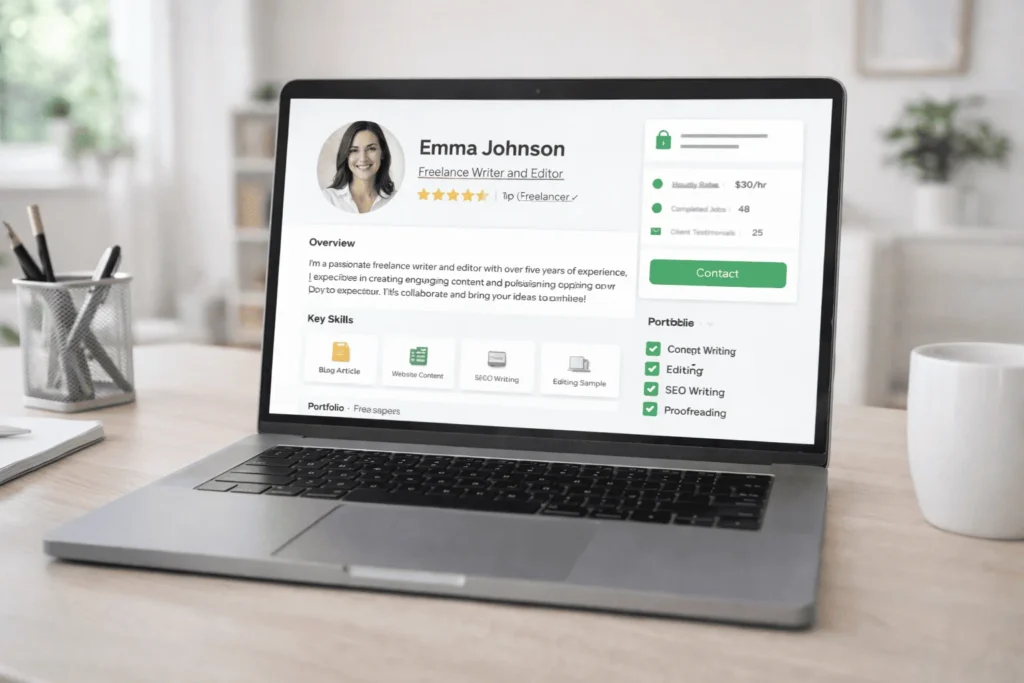
Your profile is your first impression. When a client visits your page, they decide within seconds whether to hire you or keep scrolling. Make it count.
A strong beginner profile includes:
- A professional photo (friendly and clear background)
- A clear headline: what you do and who you help
- A short bio written in simple, confident language
- Your top skills listed clearly
- Your best work samples, even if they are personal projects
Profile Headline Example: ‘Beginner Copywriter | Helping Small Businesses Tell Their Story with Clear, Engaging Content’
Tip 5: Build a Portfolio Even With No Experience
‘I have no experience’ is not an excuse to skip building a portfolio. You can create samples from scratch.
Here is how:
- Write 3 sample blog posts in your niche
- Design 5 social media graphics as mock projects
- Build a simple WordPress website as a demo
- Offer to work for free or at a reduced rate for 1–2 clients in exchange for a testimonial
Even one strong project in your portfolio makes a massive difference to potential clients.
Internal Link Suggestion: The Easiest Data Entry Skills Beginners Need to Start Earning Online from Home in 2026
Tip 6: Choose the Right Freelancing Platform
Not all platforms are the same. As a beginner, choose one or two and focus on them.
| Platform | Best For | Beginner Friendly? |
| Fiverr | Creative services, writing, design | Yes — great for starters |
| Upwork | Tech, writing, marketing | Moderate |
| PeoplePerHour | UK-based clients, general skills | Yes |
| Toptal | Senior developers, designers | No — requires expertise |
| Networking + direct client outreach | Yes, with effort |
Part 3: Landing Your First Clients
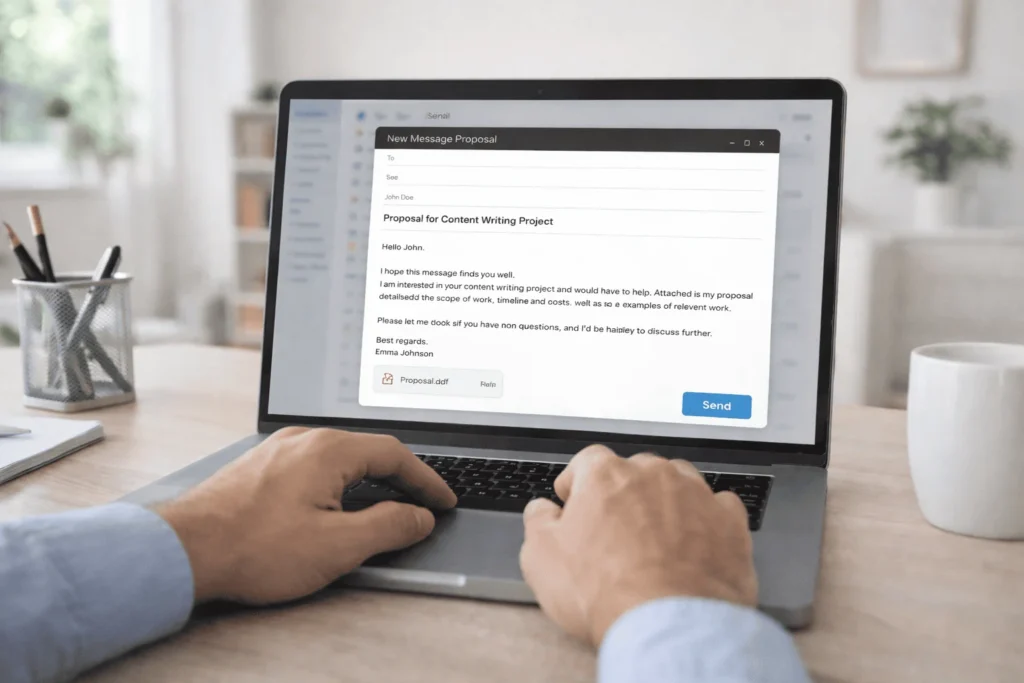
Tip 7: Write Proposals That Actually Get Read
Most beginners copy and paste the same generic proposal to every client. Clients can tell immediately — and they ignore it.
A winning proposal does three things:
- Shows you read the job posting carefully
- Explains specifically how YOU can solve the client’s problem
- Ends with a clear, low-pressure call to action
Quick Template: “Hi [Name], I noticed you need [specific task]. I have been building skills in [relevant area] and here is how I would approach your project: [1–2 sentences]. I would love to discuss this further — would you be available for a quick chat?”
Tip 8: Price Your Services Fairly — Not Too Low
Many beginners make the mistake of charging almost nothing to ‘compete.’ While starting low is sometimes necessary, pricing yourself too cheaply signals low quality and attracts difficult clients.
A smarter approach:
- Research what others at your level charge on Fiverr or Upwork
- Start at the lower end of the market rate — not below it
- Raise your rates after your first 3–5 successful projects
For context: most beginner freelance writers charge $15–$30 per article, beginner designers $25–$75 per design, and virtual assistants $8–$15 per hour.
Tip 9: Follow Up and Communicate Professionally
Clear, prompt communication is one of the easiest ways to stand out as a new freelancer.
- Reply to messages within 24 hours
- Confirm the project scope in writing before starting
- Give progress updates without being asked
- Deliver on time — always
Key Insight: Many clients rehire freelancers not because they were the most talented, but because they were the most reliable and easiest to work with.
Part 4: Daily Habits for Freelancing Success
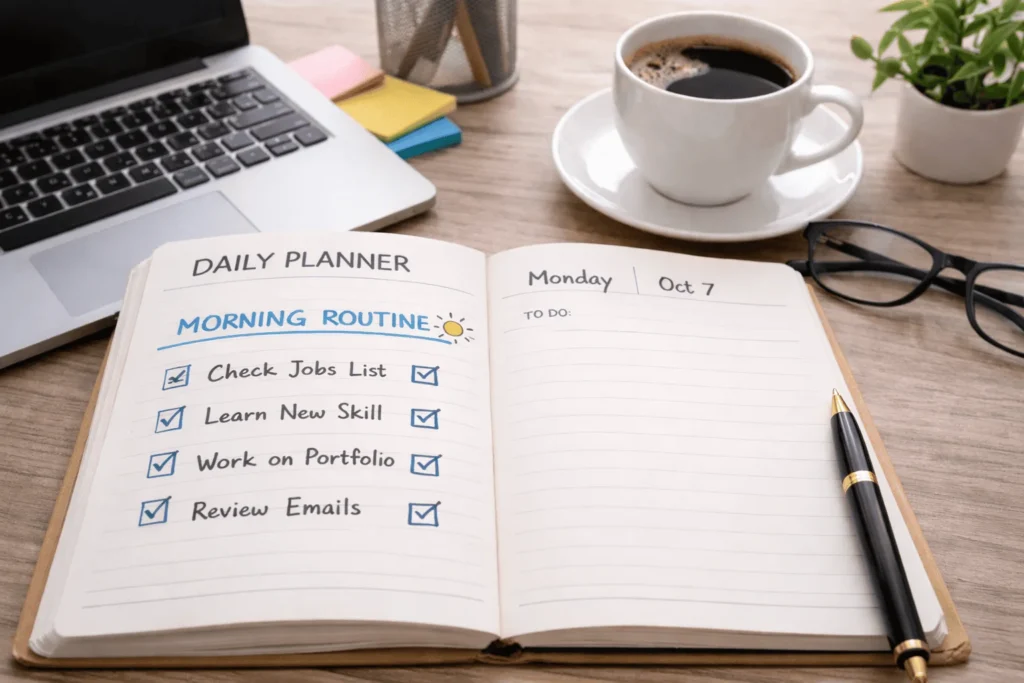
Tip 10: Build a Daily Work Routine
One of the hardest parts of freelancing is that there is no boss telling you what to do. That freedom is exciting — but it can also lead to procrastination.
A simple daily routine for beginner freelancers:
- Morning: Skill practice or learning (30–60 minutes)
- Late morning: Client work or project delivery
- Afternoon: Proposal writing and applying to jobs
- Evening: Networking, reviewing feedback, planning tomorrow
Tip 11: Manage Your Time Wisely
Freelancing comes with a common trap: taking on too many tasks and delivering poor work under pressure.
Common time management mistakes beginners make:
- Accepting every project without considering deadlines
- Not tracking hours spent on tasks
- Spending too much time on low-value work
Free tools to manage your time: Toggl (time tracking), Trello or Notion (task organization), Google Calendar (scheduling).
Tip 12: Avoid Procrastination With the 2-Minute Rule
Procrastination is one of the biggest productivity killers for beginner freelancers.
Try this: if a task takes less than 2 minutes, do it immediately. For bigger tasks, break them into small steps and start with just the first one. Getting started is often the hardest part — once you begin, momentum kicks in.
Part 5: Growing and Sustaining Your Freelance Career

Tip 13: Collect Testimonials and Reviews
Social proof is one of your most powerful marketing tools. After every successful project, politely ask your client for a review or testimonial.
A simple request: “Thank you so much for working with me! If you are happy with the result, would you mind leaving a short review on [platform]? It helps me grow and serve clients like you better.”
Five good reviews can transform your profile from invisible to in-demand.
Tip 14: Network Online to Get More Clients
Many freelancers get their best clients not from job boards, but from building relationships.
- Join Facebook groups in your niche (e.g., ‘Freelance Writers Community’)
- Engage genuinely on LinkedIn — comment, share, connect
- Offer helpful advice in forums without pitching yourself
- Reach out directly to small business owners with a personalized message
Internal Link Suggestion: Freelance Jobs for Beginners: The Ultimate Guide to Building a Successful Online Career 2026
Tip 15: Think Long-Term — Skills Are Your Real Asset
Here is the mindset shift that separates successful freelancers from those who give up:
Your income will follow your skills. The more you invest in learning, practicing, and improving, the more you can earn. Freelancing is not a shortcut — it is a career path.
Focus on becoming the best version of yourself in your chosen skill. Read, practice, take feedback seriously, and keep going even when progress feels slow.
Frequently Asked Questions (FAQ)

What are the basic freelancing tips for beginners starting out?
Start by choosing one skill, building a strong profile, and completing your first 1–2 projects — even for free or low rates — to gain experience and a testimonial.
How can beginners find their first freelance clients without experience?
Use platforms like Fiverr and Upwork, create portfolio samples from scratch, reach out to people in your network, and engage in relevant online communities.
What essential skills should beginners learn for freelancing success?
Beyond your main skill, focus on communication, time management, proposal writing, and basic digital tools like Google Docs, Trello, and Zoom.
How do beginners set realistic earning goals in freelancing?
Expect months 1–2 to focus on learning with minimal income. Aim for your first $100–$400 in months 3–4 as you land initial clients and build your profile.
How do beginners price their services fairly to earn steadily?
Research market rates on Upwork and Fiverr for your skill level. Start at the lower end of mid-market pricing — not rock-bottom — and increase as you gain reviews.
What free resources teach beginners key freelancing skills?
Google Digital Garage, HubSpot Academy, Coursera (free audit), YouTube, and Canva Design School are all excellent starting points.
How can beginners build a portfolio with no prior freelance work?
Create mock projects, offer a free or heavily discounted project to 1–2 clients in exchange for feedback, or use personal passion projects as samples.
How do beginners handle client communication effectively?
Reply within 24 hours, clarify project details upfront, provide progress updates, and always deliver on time. Clear and professional communication builds trust fast.
Conclusion: Start Learning, Start Earning
Freelancing is one of the most accessible ways to build an income online — but it requires patience, consistency, and a commitment to learning.
You now have 15 proven freelancing tips for beginners to guide your journey:
- Choose one skill and master it
- Build your profile and portfolio from day one
- Write proposals that speak to the client’s needs
- Communicate professionally and always deliver on time
- Develop daily habits that keep you productive and growing
The most successful freelancers are not the most talented ones — they are the most consistent.
Start learning today. Build your skills step by step. Your freelancing journey begins with a single action.
Internal Link Suggestion: Top 10 Best Freelance Websites for High-Paying Gigs