Contents
- 1 Introduction
- 2 What Is Freelancing? (And Why It’s Not Get-Rich-Quick)
- 3 The Most In-Demand Freelancing Skills in 2026
- 4 Comparing Skills: Which One Is Right for You?
- 5 Step-by-Step: How to Actually Start Freelancing in 2026
- 5.1 Step 1: Pick ONE Skill and Commit to Learning It
- 5.2 Step 2: Build a Portfolio (Even Without Clients)
- 5.3 Step 3: Choose Your Freelancing Platform
- 5.4 Step 4: Create a Winning Profile
- 5.5 Step 5: Write Proposals That Get Responses
- 5.6 Step 6: Price Your Services Realistically
- 5.7 Step 7: Deliver Exceptional Work and Get Testimonials
- 5.8 Step 8: Scale From Side Hustle to Full-Time (If That’s Your Goal)
- 6 Common Freelancing Mistakes (And How to Avoid Them)
- 7 Real Talk: What to Expect in Your First Year
- 8 Essential Tools Every Freelancer Needs (Most Are Free)
- 9 Frequently Asked Questions About Freelancing
- 9.1 Can I start freelancing with no experience?
- 9.2 How much can I realistically earn as a beginner freelancer?
- 9.3 What freelancing skills are easiest to learn for beginners?
- 9.4 Do I need to register a business or pay taxes on freelance income?
- 9.5 Which freelancing platform is best for beginners?
- 9.6 How do I find my first freelancing clients?
- 9.7 How long does it take to start making money freelancing?
- 9.8 What should I charge as a new freelancer?
- 9.9 Can I freelance while working a full-time job?
- 9.10 What if I don’t get any responses to my proposals?
- 9.11 Is freelancing better than a regular job?
- 10 Resources to Help You Learn and Grow
- 11 Final Thoughts: Your Freelancing Journey Starts Today
- 12 What’s Your Next Step?
Introduction
Are you tired of the 9-to-5 grind? Do you dream of working from anywhere in the world, setting your own schedule, and being your own boss? If you’ve been thinking about freelancing but don’t know where to start, you’re in exactly the right place.
I’m not going to promise you overnight riches or tell you that freelancing is easy money. The truth is, building a successful freelance career takes time, effort, and dedication. But here’s the good news: it’s absolutely achievable if you’re willing to learn, stay consistent, and approach it the right way.
In this guide, I’ll walk you through everything you need to know about starting your freelancing journey in 2026. Whether you’re a student, a stay-at-home parent, or someone looking to transition from traditional employment, this guide will give you a realistic roadmap to start earning online.

What Is Freelancing? (And Why It’s Not Get-Rich-Quick)
Let’s start with the basics. Freelancing means offering your skills and services to clients on a project-by-project basis. Instead of working for one employer full-time, you work with multiple clients, choosing when and where you work.
But here’s what I need you to understand right from the start: freelancing is not a shortcut to easy money. You’ll see plenty of ads and courses promising you can make $10,000 in your first month. That’s not realistic for beginners, and I won’t lie to you like that.
The reality is that most new freelancers start small. You might earn $100-$500 in your first month if you’re just starting out. Some people take three to six months before they see consistent income. And that’s completely normal.
What makes freelancing worth it isn’t instant cash—it’s the freedom, flexibility, and potential to build something that grows over time as your skills improve.
The Most In-Demand Freelancing Skills in 2026
One of the first questions I hear is: “What skill should I learn?” The good news is there are dozens of viable options. The key is choosing something that aligns with your interests and has real market demand.
1. Content Writing and Copywriting
If you enjoy writing and can communicate ideas clearly, content writing is one of the best entry points into freelancing. Businesses need blog posts, website copy, email campaigns, and social media content constantly.
What you’ll need to learn:
- SEO basics (how to write content that ranks on Google)
- Understanding your audience and writing for them
- Basic copywriting principles (headlines, calls-to-action)
- Grammar and editing skills
Realistic earnings: Beginners: $15-$30 per article | Experienced: $100-$500+ per article
2. Graphic Design
Every business needs visual content—logos, social media graphics, presentations, marketing materials. If you have a creative eye and enjoy design, this could be your path.
What you’ll need to learn:
- Design tools (Canva for beginners, Adobe Illustrator/Photoshop for advanced)
- Color theory and typography
- Understanding of branding and visual identity
- Creating designs that convert (not just look pretty)
Realistic earnings: Beginners: $20-$50 per project | Experienced: $200-$2,000+ per project
3. Social Media Management
Businesses know they need to be on social media, but many don’t have time to manage it themselves. That’s where you come in.
What you’ll need to learn:
- How each platform works (Instagram, Facebook, LinkedIn, TikTok, X)
- Content planning and scheduling
- Understanding analytics and what works
- Basic graphic design and video editing
Realistic earnings: Beginners: $200-$500/month per client | Experienced: $1,000-$5,000+/month per client
4. Web Development
If you’re more technically inclined, web development offers excellent earning potential. The learning curve is steeper, but the demand is huge.
What you’ll need to learn:
- HTML, CSS, JavaScript (the basics)
- WordPress or other content management systems
- Responsive design (making websites work on all devices)
- Basic SEO and site speed optimization
Realistic earnings: Beginners: $500-$1,500 per website | Experienced: $3,000-$15,000+ per project
5. Virtual Assistance
This is one of the most accessible skills to start with because it leverages things you might already know—email management, scheduling, data entry, customer service.
What you’ll need to learn:
- Organizational and time management skills
- Common business tools (Google Workspace, project management software)
- Professional communication
- Specific tools your clients use
Realistic earnings: Beginners: $10-$20/hour | Experienced: $25-$75+/hour
6. Video Editing
With the explosion of video content on YouTube, TikTok, and Instagram, video editors are in high demand. If you enjoy working with visual media, this could be perfect.
What you’ll need to learn:
- Editing software (DaVinci Resolve is free, Premiere Pro is industry standard)
- Pacing, timing, and storytelling through video
- Color correction and audio editing
- Different video styles for different platforms
Realistic earnings: Beginners: $50-$150 per video | Experienced: $300-$2,000+ per video
Comparing Skills: Which One Is Right for You?
| Skill | Learning Time | Startup Cost | Beginner Demand | Long-term Potential |
|---|---|---|---|---|
| Content Writing | 1-3 months | Very Low (Free tools) | High | Medium-High |
| Graphic Design | 2-4 months | Low (Canva free, Adobe $55/mo) | High | High |
| Social Media Management | 2-3 months | Very Low (Free tools) | Very High | Medium-High |
| Web Development | 4-8 months | Low (Free resources) | Medium | Very High |
| Virtual Assistance | 1-2 months | Very Low (Free tools) | Very High | Medium |
| Video Editing | 2-4 months | Low-Medium (Free to $21/mo) | High | High |
Step-by-Step: How to Actually Start Freelancing in 2026
Now that you know what skills are in demand, let me walk you through the actual process of getting started. This is the roadmap I wish I had when I began.
Step 1: Pick ONE Skill and Commit to Learning It
This is where most people go wrong. They try to learn five skills at once and end up mastering none of them. Don’t do this.
Choose one skill that genuinely interests you and that has market demand. Then commit to learning it for at least 2-3 months before you even think about switching.
How to learn your skill:
- YouTube: Free tutorials on literally every skill (search for “[your skill] for beginners 2026”)
- Coursera and edX: Many free courses from top universities
- Skillshare: Often has free trials with practical project-based courses
- Practice projects: Create fake projects to build your portfolio (this is crucial)
Set a learning schedule—even just 1 hour a day adds up to 30 hours a month, which is enough to build solid foundations.

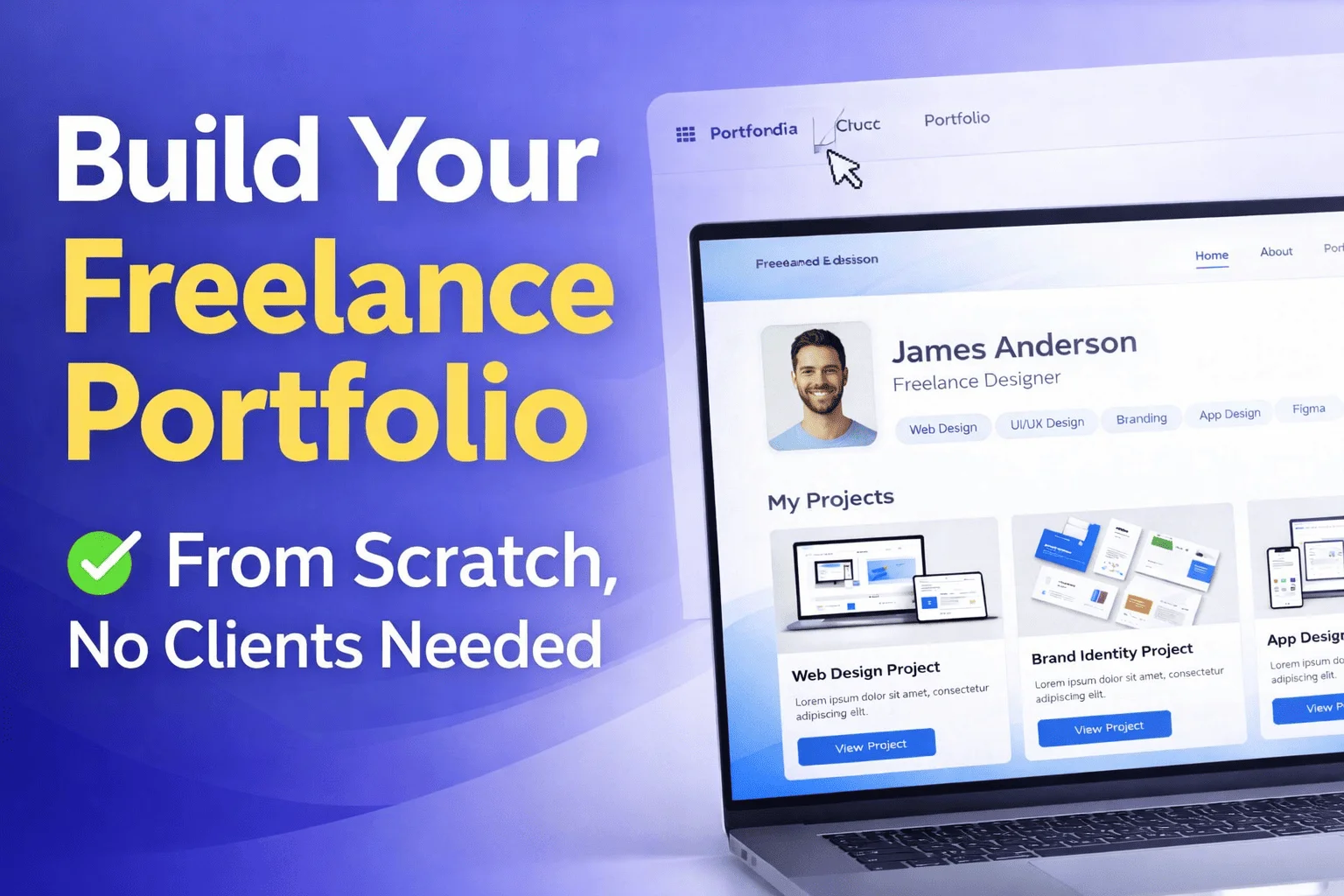
Step 2: Build a Portfolio (Even Without Clients)
Here’s a secret: you don’t need real clients to have a portfolio. You can create sample projects that demonstrate your skills.
For Writers: Write sample blog posts on topics in your niche. Create a free Medium or WordPress blog to showcase them.
For Designers: Create sample logos, social media graphics, or redesign existing brands as practice projects.
For Social Media Managers: Create a mock social media calendar and sample posts for a fictional business.
For Web Developers: Build sample websites or redesign existing ones. Host them on free platforms like GitHub Pages.
For Virtual Assistants: Create a document showcasing your organizational systems, tools you can use, and processes you’d implement.
For Video Editors: Edit sample videos from stock footage or create a montage showcasing different editing styles.
Your portfolio doesn’t need to be fancy. It just needs to clearly show what you can do.
Step 3: Choose Your Freelancing Platform
Where you look for clients matters. Different platforms work better for different skills and experience levels.
| Platform | Best For | Competition Level | Fees |
|---|---|---|---|
| Upwork | All skills, especially writing and development | Very High | 5-20% of earnings |
| Fiverr | Quick services, design, writing, video editing | Very High | 20% of earnings |
| Freelancer.com | Technical skills, design, writing | High | 10% or $5 per project |
| PeoplePerHour | Design, development, marketing | Medium-High | 20% on first invoice, then 7.5% |
| Professional services, B2B clients (free) | Medium | Free | |
| Facebook Groups | Local clients, various services (free) | Low-Medium | Free |
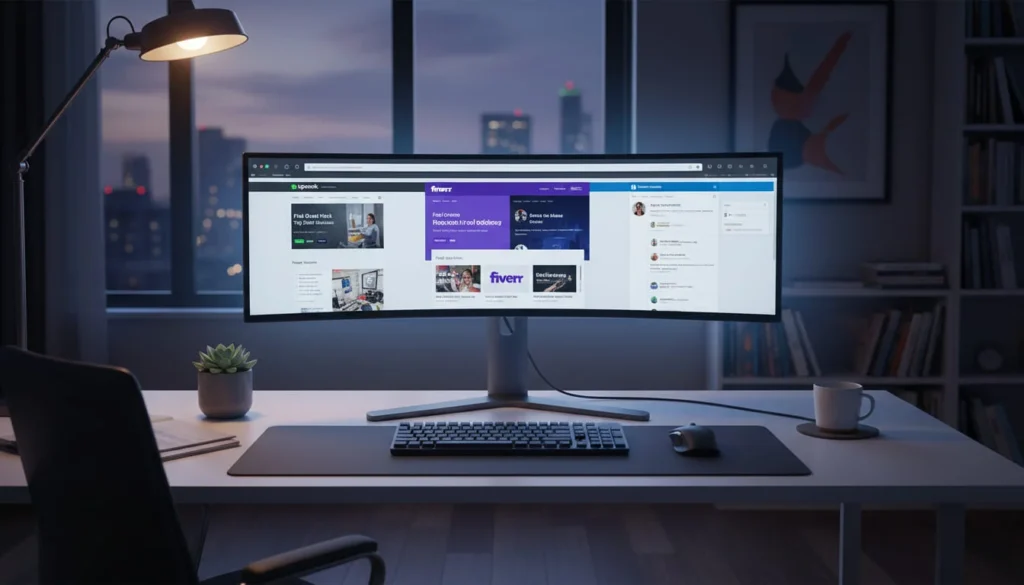
My recommendation for beginners: Start with one paid platform (Upwork or Fiverr) and one free method (LinkedIn or Facebook groups). This gives you multiple chances to land clients without spreading yourself too thin.
Step 4: Create a Winning Profile
Your profile is your digital storefront. Here’s how to make it stand out without lying or exaggerating:
Profile Photo: Use a clear, professional headshot. You don’t need a fancy photographer—a friend with a smartphone in good natural light works fine. Smile and look approachable.
Headline: Don’t just say “Freelance Writer.” Be specific: “SEO Content Writer | Helping Small Businesses Rank Higher on Google”
About Section: Focus on what you can do for clients, not just your story.
Weak: “I’m a beginner freelancer looking for opportunities to gain experience.”
Strong: “I create SEO-optimized blog posts that help businesses attract more organic traffic. I specialize in the health and wellness niche and understand how to write content that both ranks well and engages readers.”
Portfolio Samples: Include 3-5 of your best work samples with brief descriptions explaining the project and results (even if they’re practice projects).
Step 5: Write Proposals That Get Responses
When you’re starting out, you’ll need to apply to jobs. Here’s the biggest mistake beginners make: sending generic proposals.
Bad proposal example:
“Hi, I’m interested in this project. I have experience in content writing and can deliver quality work. Please consider me for this project.”
Better proposal example:
“Hi [Client Name],
I noticed you’re looking for someone to write blog posts about sustainable living. This caught my attention because I’ve been researching and writing about eco-friendly lifestyle changes for the past six months.
I checked out your website and saw you already have great content about zero-waste living. I think I could add value by writing about [specific topic from their job post], with a focus on practical tips that your readers can implement immediately.
I’ve attached a sample article I wrote on [related topic] so you can see my writing style. I’m confident I can match your brand voice and deliver content that resonates with your audience.
I’m available to start immediately and can deliver the first article within 5 days. Would you be open to a quick call to discuss your content goals?
Best regards,
[Your Name]”
See the difference? The second proposal shows you actually read their job post, understand their needs, and have relevant experience.
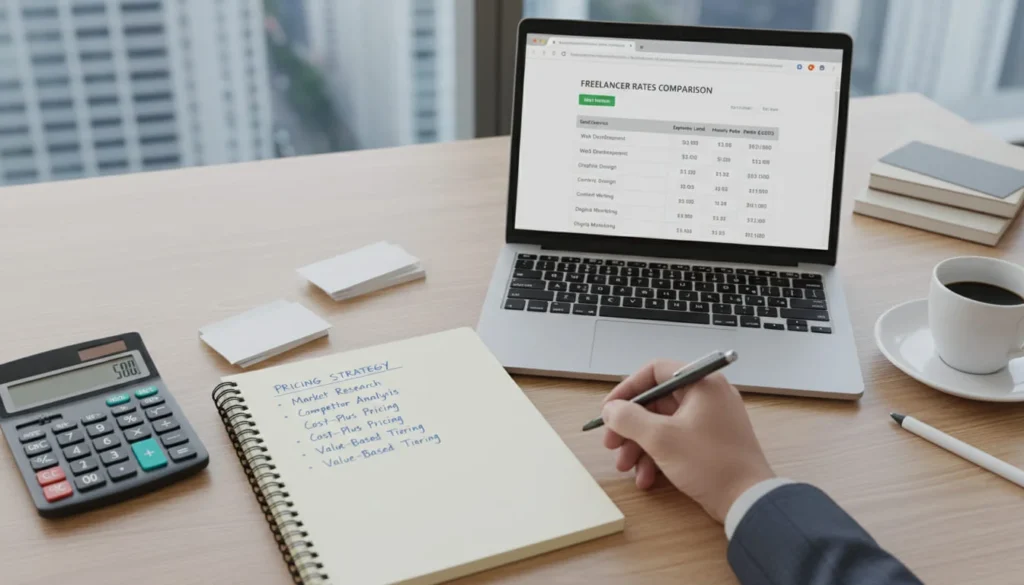
Step 6: Price Your Services Realistically
Pricing is tricky when you’re starting out. You don’t want to undervalue yourself, but you also need to be competitive as a beginner.
Here’s my honest advice: start slightly below market rate to get your first 5-10 clients and build reviews. Once you have proven results and testimonials, increase your prices.
Example pricing progression for a content writer:
- First 5 projects: $20-$30 per 1000-word article
- Projects 6-20 (with good reviews): $40-$60 per article
- After 20+ projects and specialized niche: $100-$300+ per article
Don’t work for free. Even if you charge a modest rate, it establishes that your work has value and helps you gain experience working with real clients.
Step 7: Deliver Exceptional Work and Get Testimonials
Here’s what separates successful freelancers from those who struggle: consistency and communication.
Always:
- Deliver on time (or early if possible)
- Communicate proactively—don’t make clients chase you for updates
- Ask clarifying questions upfront to avoid revisions
- Go slightly above and beyond what’s expected
- Ask satisfied clients for testimonials and reviews
Your reputation is everything in freelancing. One great client can lead to referrals and long-term work worth thousands of dollars.
Step 8: Scale From Side Hustle to Full-Time (If That’s Your Goal)
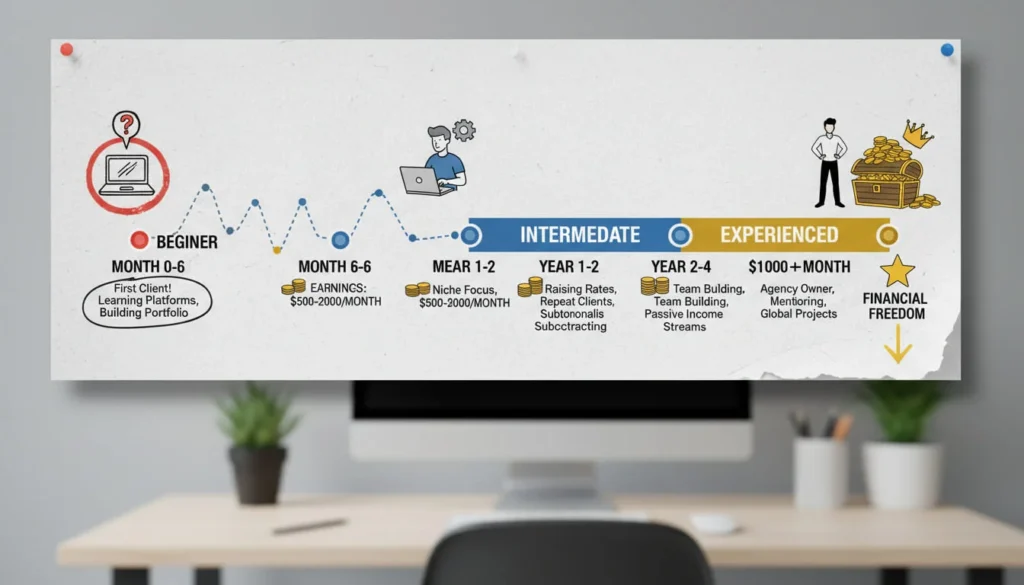
Once you’re earning consistently, you can start thinking about growth. Here’s a realistic timeline:
- Months 1-3: Learn your skill, build portfolio, get first clients ($100-$500/month)
- Months 4-6: Build consistent client base, improve skills ($500-$1,500/month)
- Months 7-12: Specialize, increase rates, get repeat clients ($1,500-$3,000+/month)
- Year 2+: Full-time potential with established client base and higher rates ($3,000-$10,000+/month)
These numbers vary widely depending on your skill, dedication, and market conditions—but they’re realistic benchmarks based on what I’ve seen work for beginners who stay consistent.
Common Freelancing Mistakes (And How to Avoid Them)
Mistake #1: Trying to Learn Too Many Skills at Once
Focus beats variety when you’re starting. Master one skill, start earning, then expand if you want to.
Mistake #2: Undercharging for Too Long
Yes, start competitively priced—but increase your rates as you gain experience. If you’ve completed 20+ projects successfully, you should not still be charging beginner rates.
Mistake #3: Not Treating It Like a Real Business
Track your income and expenses, save for taxes, maintain professional communication, meet deadlines. This is a business, not a hobby.
Mistake #4: Giving Up Too Soon
The first few months are the hardest. Most people quit right before they would have started seeing results. Give yourself at least 6 months of consistent effort before deciding freelancing isn’t for you.
Mistake #5: Not Building Relationships
Freelancing isn’t just about completing projects—it’s about building relationships. Stay in touch with past clients, ask for referrals, and treat every client interaction as a chance to build your reputation.

Real Talk: What to Expect in Your First Year
Let me be completely honest with you about what your first year might look like:
Month 1-2: You’ll probably feel overwhelmed. You’re learning new skills, figuring out platforms, and might not land any clients yet. This is normal. Keep learning and applying.
Month 3-4: You might land your first client or two. The projects might be small, and you might make mistakes. That’s okay—this is your learning phase. Get that first review.
Month 5-6: You’re starting to feel more confident. You might have 2-3 active clients. The money still isn’t great, but you’re building momentum and a portfolio of real work.
Month 7-9: Things start clicking. You’ve raised your rates at least once. You might get repeat clients or referrals. The income is becoming more predictable.
Month 10-12: You’re established. You have a steady flow of clients, you know what you’re worth, and you’re starting to see freelancing as a real income source, not just a side hustle.
Some people progress faster. Some take longer. The key is staying consistent and not giving up during the hard early months.
Essential Tools Every Freelancer Needs (Most Are Free)
You don’t need expensive tools to start freelancing. Here’s what I actually use and recommend:
Communication:
- Gmail (free professional email)
- Zoom (free for meetings under 40 minutes)
- Slack (free for client communication)
Project Management:
- Trello (free for organizing your work)
- Google Calendar (free for scheduling)
- Notion (free for notes and planning)
Skill-Specific Tools:
- Writers: Grammarly (free version), Google Docs, Hemingway Editor (free)
- Designers: Canva (free), GIMP (free alternative to Photoshop)
- Developers: VS Code (free), GitHub (free)
- Video Editors: DaVinci Resolve (free), CapCut (free)
Invoicing and Payments:
- PayPal or Wise for international payments
- Wave (free invoicing)
- Spreadsheet for tracking income and expenses
Start with free tools and upgrade only when you’re earning enough to justify the expense.
Frequently Asked Questions About Freelancing
Can I start freelancing with no experience?
Yes, absolutely. Everyone starts somewhere. The key is to learn a valuable skill first, create sample work to demonstrate your abilities, and start with smaller projects to build your reputation. You don’t need years of corporate experience to offer freelance services—you just need to be competent at what you’re offering and willing to deliver quality work.
How much can I realistically earn as a beginner freelancer?
In your first month, you might earn $0-$300 as you’re still learning and landing your first clients. By months 3-6, realistic earnings are $500-$1,500 per month if you’re working part-time hours. After 6-12 months of consistent work, many freelancers earn $2,000-$4,000 per month. These numbers vary greatly depending on your skill, hours worked, and how quickly you improve. Don’t expect to match a full-time salary immediately—freelancing is a gradual build.
What freelancing skills are easiest to learn for beginners?
Virtual assistance, content writing, and social media management tend to have the lowest barriers to entry because they build on skills many people already have. You can start learning and applying these skills within 1-2 months. Graphic design using tools like Canva is also beginner-friendly. More technical skills like web development or video editing take longer to learn (3-6 months) but often pay more once you’re competent.
Do I need to register a business or pay taxes on freelance income?
This depends on your country. In the US, you should report all freelance income on your taxes, even if it’s just a side hustle. You don’t need to register an LLC immediately—most beginners operate as sole proprietors. Set aside about 25-30% of your income for taxes. In other countries, tax requirements vary, so check your local regulations. The key principle: freelance income is taxable income, so track everything and consult with a tax professional in your area as your income grows.
Which freelancing platform is best for beginners?
Upwork tends to be best for writers, developers, and virtual assistants. Fiverr works well for designers, video editors, and anyone offering specific quick-turnaround services. However, I recommend also building a presence on LinkedIn (free) and joining relevant Facebook groups where you can find clients without paying platform fees. Try multiple platforms for the first few months to see where you get the best response, then focus your energy on the one or two that work best for your skill.
How do I find my first freelancing clients?
Start by creating profiles on 1-2 freelancing platforms (Upwork, Fiverr, etc.) and apply to relevant job postings daily. Simultaneously, reach out to your personal network—tell friends, family, and former colleagues what you’re doing. Join LinkedIn and engage with posts in your industry. Participate in relevant Facebook groups and subreddits. Your first client might come from anywhere, so cast a wide net initially. Many successful freelancers landed their first client through someone they already knew.
How long does it take to start making money freelancing?
Realistically, expect 1-3 months before you earn your first dollar. This includes time to learn your skill, build a portfolio, set up profiles, and land your first client. Some people get lucky and find work within weeks, but the average beginner takes 2-3 months of active effort. The important thing is not to get discouraged if you don’t see immediate results. Focus on improving your skills and consistently applying to opportunities.
What should I charge as a new freelancer?
Research the average rates for your skill and location, then price yourself 20-30% below market rate for your first 5-10 projects. This helps you get those crucial first reviews. For example, if experienced writers in your niche charge $0.10-$0.15 per word, you might charge $0.05-$0.08 to start. After completing 10+ projects successfully, increase your rates gradually. Never work for free—even a modest rate establishes the value of your work and helps you gain real client experience.
Can I freelance while working a full-time job?
Yes, and this is actually the best way to start. Begin freelancing part-time (evenings and weekends) while keeping your regular job for financial stability. Dedicate 5-10 hours per week initially. Once your freelance income consistently matches or exceeds your full-time salary for 3-6 months, you can consider transitioning fully. Never quit your job to freelance unless you have at least 6 months of living expenses saved and a steady client base established.
What if I don’t get any responses to my proposals?
If you’re sending 20+ proposals and getting zero responses, something needs to change. Review your profile—does it clearly show what you can do? Are your portfolio samples high quality? Is your proposal personalized to each job, or are you sending generic messages? Try applying to smaller, lower-budget projects initially to build reviews. Consider whether you’re applying to jobs that match your skill level. Sometimes the issue is targeting projects that are too advanced for your current experience level.
Is freelancing better than a regular job?
It depends on what you value. Freelancing offers flexibility, variety, potential for higher income, and being your own boss. However, it also means no guaranteed paycheck, no benefits, irregular income (especially at first), and handling all business tasks yourself. Traditional jobs offer stability, benefits, and predictable income. Many people do both—freelancing part-time for extra income while keeping a full-time job for security. There’s no universal “better” option—it depends on your personal situation, risk tolerance, and career goals.
Resources to Help You Learn and Grow
Free Learning Platforms:
- YouTube (tutorials for virtually every skill)
- Coursera (free courses from universities)
- HubSpot Academy (free marketing and sales courses)
- Google Digital Garage (free digital marketing certification)
- freeCodeCamp (free coding education)
Communities to Join:
- Reddit: r/freelance, r/Entrepreneur, r/WorkOnline
- Facebook: Search for “[your skill] freelancers” groups
- LinkedIn: Follow influencers in your niche and engage with their content
- Discord: Many freelancing communities have active servers
Blogs and Websites Worth Following:
- Freelancers Union (resources and community)
- The Balance Small Business (freelancing tips)
- Being Freelance (podcast and blog)
- Your skill-specific blogs (search “best blogs for [your skill]”)

Final Thoughts: Your Freelancing Journey Starts Today
If you’ve read this far, you’re already ahead of most people who just talk about freelancing but never take action. The fact that you’re here, learning and preparing, tells me you’re serious about this.
Here’s what I want you to remember: freelancing is not a magic solution to all your problems. It won’t make you rich overnight. It will challenge you, frustrate you at times, and require more discipline than you might expect.
But it’s also one of the most rewarding paths you can take. The freedom to work from anywhere, choose your projects, set your own schedule, and build something that’s entirely yours—that’s worth the effort.
The best time to start was yesterday. The second-best time is today.
Pick one skill from this guide. Commit to learning it for the next 30 days. Create three sample projects. Set up one freelancing platform profile. Send your first five proposals.
You don’t need to be perfect. You don’t need to know everything. You just need to start.
Six months from now, you’ll be grateful you began today. One year from now, you could have a thriving freelance business that gives you the freedom you’ve been dreaming about.
The journey of a thousand miles begins with a single step. Take yours today.
What’s Your Next Step?
Now that you have the roadmap, it’s time to take action. Start by choosing one skill that resonates with you and commit to mastering it. Remember, consistency beats perfection every single time.
Build your skills step by step, stay patient with the process, and keep learning as you go. The freelancing world is waiting for someone exactly like you, with your unique perspective and abilities.
Start learning today. Your future self will thank you.