Let me paint you a picture.
It’s 2018. I’m sitting in my tiny apartment, wearing sweatpants that should’ve been retired years ago. I just registered my first online business — a little side hustle selling digital planners. My heart is racing. My palms are sweaty. I have no idea what I’m doing.
I thought launching a business meant you needed a fancy office, a team of experts, and a bank account that doesn’t laugh at you.
Boy, was I wrong.
By the way, I learned the hard way. I bought expensive software I didn’t need. I signed up for tools that were overkill for a one-person show. I wasted money like it was going out of style.
But after years of trial and error (and crying into my ramen noodles), I finally found the holy grail.
Five tools. That’s it. Five must-have business tools for beginners that helped me launch, grow, and actually enjoy the ride.
Honestly? If I had these from day one, I would’ve saved myself about 400 hours and a whole lot of grey hairs.
Let’s dive in. Your future business-owning self will thank you.
Contents
- 1 Why Beginners Overcomplicate Business Tools (And How to Avoid It)
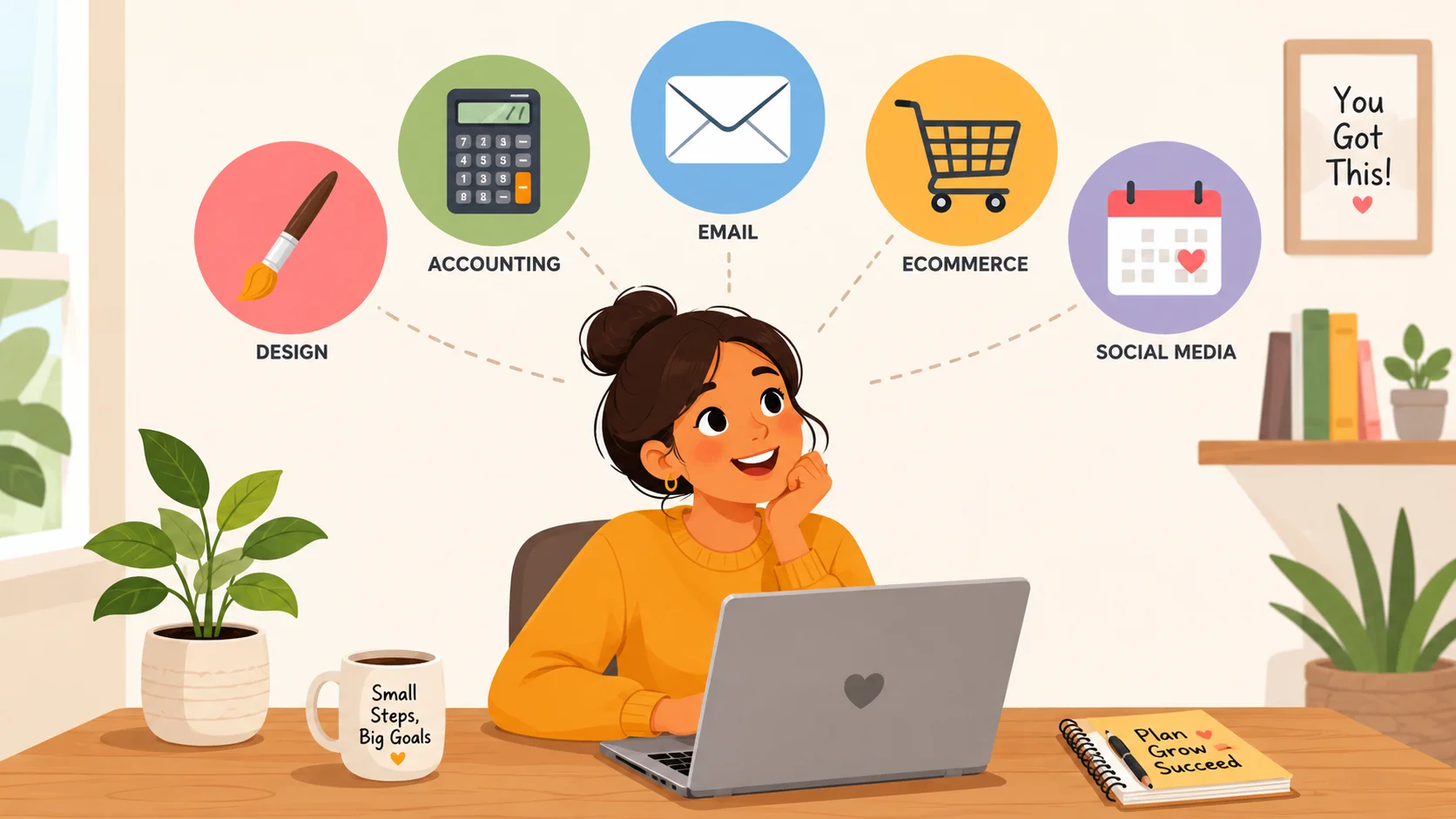
- 2 The 5 Must-Have Business Tools for Beginners
- 3 How to Choose the Right Tools for Your Business (Without Going Broke)
- 4 Frequently Asked Questions (Because You’re Smart to Ask)
- 5 My Unfiltered Truth (From Someone Who’s Been in Your Shoes)
- 6 Your Turn – Let’s Build Something Awesome
Why Beginners Overcomplicate Business Tools (And How to Avoid It)
Here’s a confession.
When I first started, I thought “business tools” meant complicated dashboards, training webinars, and monthly fees that made me nauseous. I signed up for a CRM that required a full-time IT person. I bought an email marketing tool with features I still don’t understand.
Sound familiar?
The truth is, most beginners fall into the shiny object trap. We see a tool promising “growth hacking” or “enterprise-grade analytics” and we think, “Ooh, that’ll make me look legit.”
Spoiler alert: It won’t. It’ll just drain your bank account.
Here’s what actually works: simple. Affordable. Scalable.
You don’t need a Ferrari to learn how to drive. You need a reliable sedan. The five tools below are exactly that — reliable, beginner-friendly, and ready to grow with you.
The 5 Must-Have Business Tools for Beginners
Let’s cut the fluff. Here are the five tools that took me from “clueless newbie” to “actually making money online”.
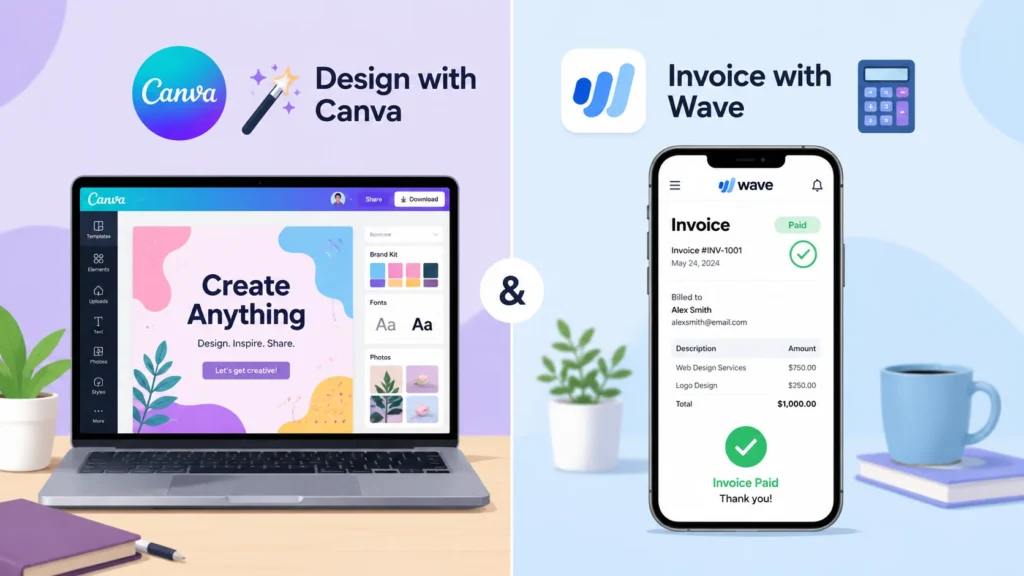
1. Canva – Design Like a Pro (Even If You Draw Like a Toddler)
Remember when I said I have the artistic talent of a potato? I meant it.
Before Canva, my logos looked like they were designed by a blind raccoon. My social media graphics? Painful. Honestly, I’m surprised anyone bought from me.
Then I discovered Canva, and suddenly I could create the following:
- Logos
- Social media posts
- Presentations
- Invoices
- Even business cards
And here’s the kicker: I didn’t learn a single design skill. Canva does the heavy lifting with drag-and-drop templates, millions of free images, and now AI features that generate text and images for you.
Why it’s a must-have:
- The free plan is incredibly generous (paid starts at $12.99/month)
- No learning curve — if you can use PowerPoint, you can use Canva
- Saves you hundreds on hiring designers
My personal story:
I designed my entire brand — logo, website graphics, and ebook covers — using Canva’s free tier. My first sale came from a Canva-designed Instagram post. True story.
For more free design resources, check out this curated list of free business tools on GitHub — it’s a goldmine for bootstrappers.
2. Wave – Accounting That Doesn’t Make You Cry
Let’s be honest: nobody starts a business because they love accounting.
I certainly didn’t. In fact, I ignored my finances for the first six months. Big mistake. Huge. When tax season came, I was scrambling through shoeboxes full of receipts like a crazy person.
Then I found Wave. And suddenly, accounting didn’t feel like a punishment.
Wave is free accounting software for small businesses. Yes, free. You can:
- Send professional invoices
- Track expenses (just take a photo of your receipt)
- Connect your bank account
- Run basic profit and loss reports
Why beginners love it:
- Zero cost for core features
- Clean, simple interface
- Accept credit card payments (small fee per transaction)
A word of advice from someone who learned the hard way:
Start tracking your finances on day one. Even if you only make $10. Future you will be so grateful. I promise.
If you want to dive deeper into small business finance, Intuit’s beginner guide to business accounting is an excellent resource.
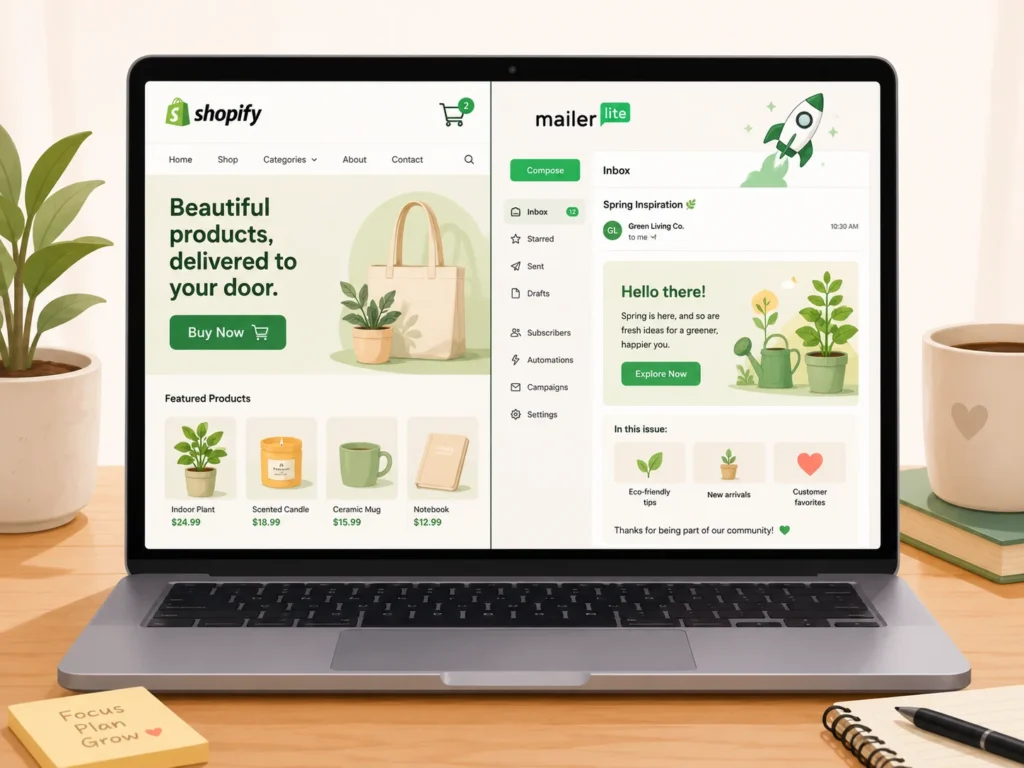
3. MailerLite – Email Marketing Without the Headache
You’ve probably heard of Mailchimp. It’s great — for bigger businesses.
But for beginners? MailerLite is where it’s at. It’s like Mailchimp’s cooler, simpler, more affordable cousin.
Here’s why I switched:
MailerLite’s free plan lets you have up to 1,000 subscribers and send 12,000 emails per month. For free. That’s huge when you’re starting.
What you can do:
- Build email signup forms (beautiful ones)
- Create automated welcome sequences
- Send newsletters that actually look good
- See who opened and clicked
My embarrassing story:
I once sent an email to my entire list with the subject line “Testing testing 123”. I meant to send it only to myself. With MailerLite, they have a “test email” button that saves you from this humiliation. Use it. Learn from my shame.
Pro tip: Start building your email list from day one. Even if you have no products yet. Those emails are digital gold.
For more email marketing insights, HubSpot’s email marketing guide for beginners is worth bookmarking.
4. Shopify – The Easiest Way to Start Selling Online
Okay, full disclosure. I tried WordPress + WooCommerce first.
It took me three days, four YouTube tutorials, and one mild breakdown just to add a “Buy Now” button. I was exhausted before I even sold anything.
Then I tried Shopify. Night and day difference.
Shopify is like IKEA furniture — except the instructions actually make sense. You sign up, pick a theme, add your products, and within an hour, you have a working online store.
Why it’s perfect for beginners:
- 3-day free trial (no credit card required)
- Then $29/month — includes hosting, security, and payment processing
- Hundreds of free and paid themes
- 24/7 customer support (real humans!)
What I love most:
Shopify handles all the scary backend stuff — security certificates, server maintenance, and PCI compliance. You just focus on selling.
I launched my first store on a Sunday afternoon. Made my first sale on Monday morning. That’s the power of keeping things simple.
For a deeper comparison of e-commerce platforms, TechRadar’s Shopify vs WooCommerce guide breaks it down nicely.
5. Later – Social Media Scheduling That Saves Your Sanity
Raise your hand if you’ve ever forgotten to post on Instagram for two weeks. ✋
Me too. It happens. Life gets busy. Your business isn’t your whole life (and it shouldn’t be).
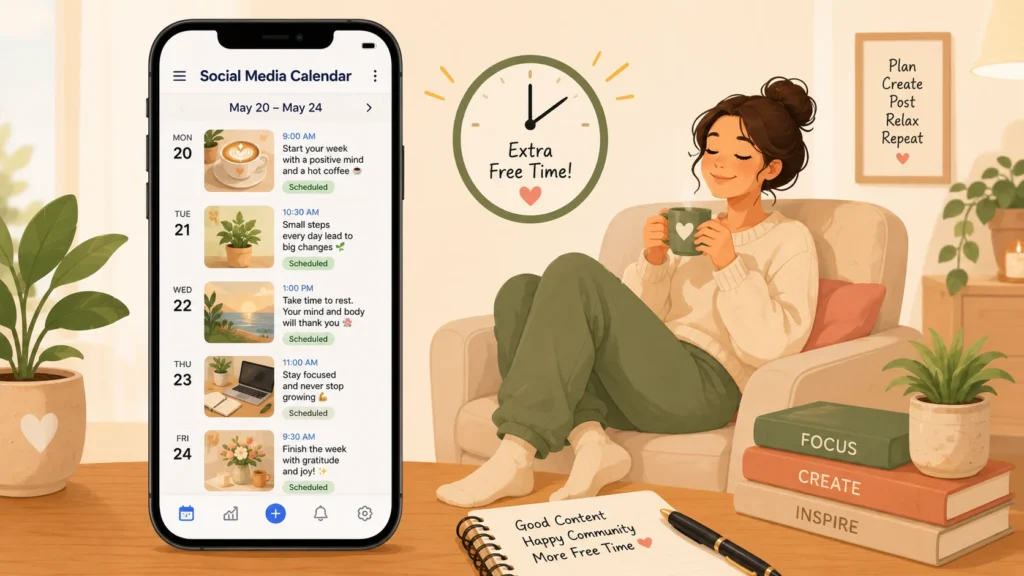
Later is a social media scheduler that lets you plan your posts in advance. You upload your photos, write your captions, and drag them into a visual calendar. Then Later automatically publishes them at the best times.
Why beginners swear by it:
- Free plan gives you 30 posts per month
- Visual calendar (you see exactly how your grid will look)
- Linkin.bio feature (turns your Instagram posts into clickable links)
My routine now:
Every Sunday evening, I spend 30 minutes scheduling my social media for the week. Then I don’t think about it again until next Sunday. My stress levels dropped like a rock.
Honestly? Later gave me back my weekends. And you can’t put a price on that.
If you’re new to social media marketing, Buffer’s complete guide to scheduling social media is a fantastic read.
How to Choose the Right Tools for Your Business (Without Going Broke)
You might be thinking: “This is great, but do I need all five right now?”
Nope. Absolutely not.
Here’s my honest advice: Start with two.
- If you’re selling products → Shopify + Canva
- If you’re building an audience → MailerLite + Later
- If you’re a service provider → Wave + Canva
Add the others as you grow. There’s no trophy for buying everything at once.
Remember: Tools are meant to serve you, not the other way around. If a tool feels complicated or stressful, dump it. There’s always a simpler alternative.
Frequently Asked Questions (Because You’re Smart to Ask)
Q: How much should a beginner spend on business tools?
A: Start with free plans. Canva, Wave, MailerLite, and Later all have generous free tiers. Shopify is the only one that requires payment ($29/month after trial). Budget $50/month maximum for your first year.
Q: Can I switch tools later if I outgrow them?
A: Yes, and you probably will. That’s normal. Most tools let you export your data. Start small, then upgrade as your business grows.
Q: What if I’m not tech-savvy at all?
A: Every tool listed has video tutorials and customer support. I’m the least techy person alive, and I figured them out. If I can, you can.
Q: Do I need a website if I use Shopify?
A: No! Shopify is your website. You don’t need separate hosting or a domain (though buying a custom domain like one yourstore.com is cheap and looks professional).
Q: What’s the #1 mistake beginners make with business tools?
A: Buying too many too fast. Start minimal. Add tools only when you feel genuine pain without them.
My Unfiltered Truth (From Someone Who’s Been in Your Shoes)
Here’s what nobody tells you about launching an online business.
It’s not about having the fanciest tools. It’s not about looking like a Fortune 500 company on day one. It’s about showing up consistently with whatever you have.
I made my first $100 with the following:
- A free Canva design
- A free MailerLite account
- A lot of determination
No fancy CRM. No expensive automation. Just me, my laptop, and these five tools.
You already have everything you need to start. Seriously. The only thing missing is the courage to take the first step.
So here’s what I want you to do: Pick one tool from this list. Just one. Spend 30 minutes setting it up today. Not tomorrow. Not next week. Today.
Future you will look back and say, “Wow, that was the day everything changed.”
Your Turn – Let’s Build Something Awesome
Now I want to hear from you.
What’s the one thing holding you back from launching your online business? Fear of tech? Lack of time? Not knowing where to start?
Drop a comment below and I’ll personally reply with a simple next step. No judgement. Just one entrepreneur helping another.
And if this article helped you? Share it with a friend who’s been dreaming of starting a business but doesn’t know where to begin. You might be the push they need.
Until next time, start small, stay consistent, and let the tools do the heavy lifting.